Healthcare analytics and workflow automation
Databasin delivers healthcare analytics, automated workflows and secure data infrastructure for health systems, hospitals and academic medical centers. We work with finance, operations, research and HR to define the improvement, build it on our platform and help people use it in their daily work.


Results from customer work

- 20+ systems unifiedDatabasin brought WashU Medicine's financial data together.
- Infrastructure costs at 1/3 of the traditional approachWashU Medicine's result from changing its data infrastructure.
18%
Higher grant proposal success
Measured at a research institution working with Databasin.
“What used to take weeks or sometimes even months now happens in minutes.”
Data and AI across healthcare teams
Finance, operations, research and HR teams use Databasin to examine performance and improve recurring work.
Finance
We build revenue-cycle views so finance can investigate denials and accounts receivable alongside departmental financial information.
- Epic (Clarity, Caboodle)
- Workday
Operations
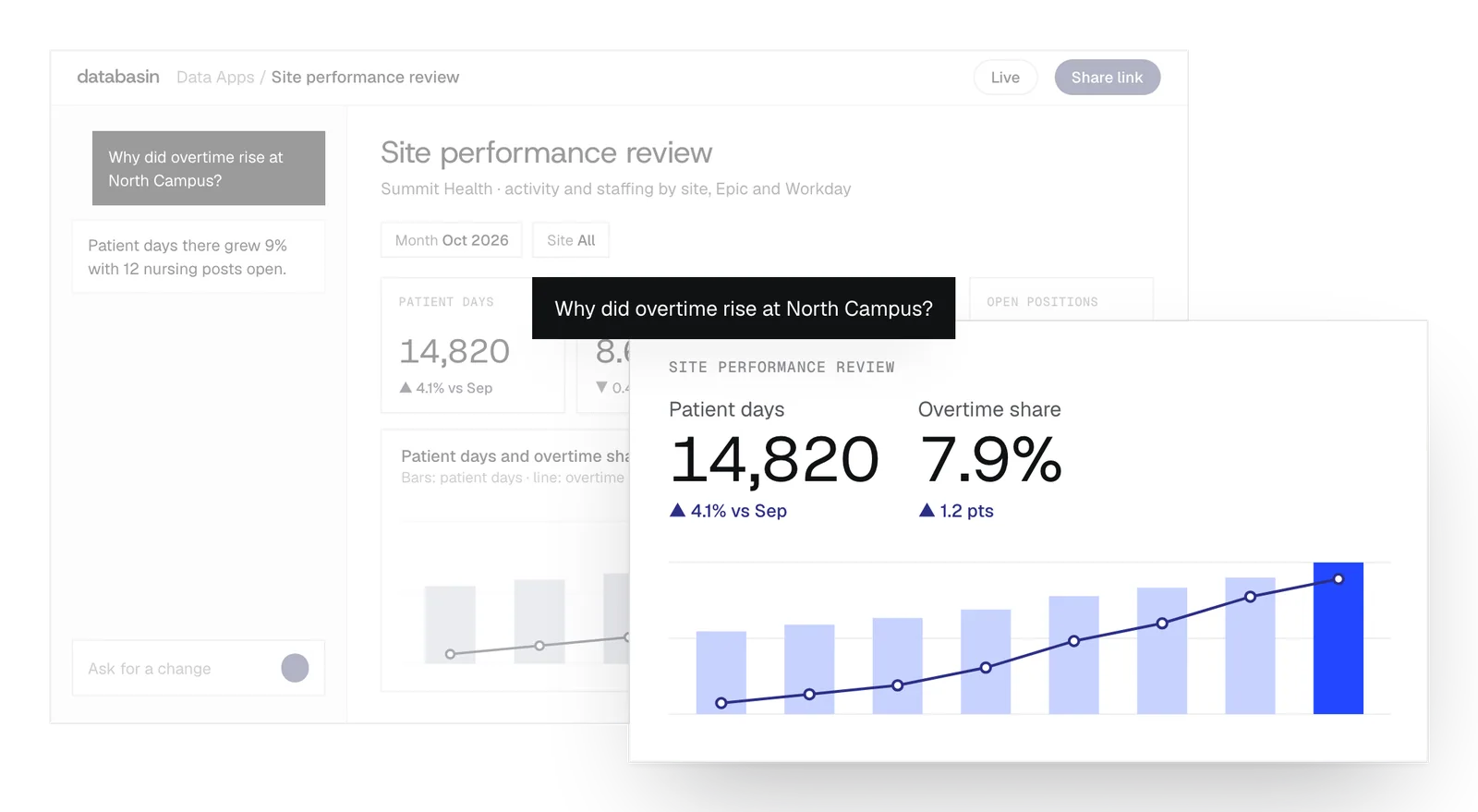
We combine activity, staffing and financial measures so operations leaders can compare sites and investigate changes in performance.
- Epic (Clarity, Caboodle)
- Workday
Research
We prepare permitted research data for shared analysis so researchers can explore institutional information together.
- REDCap and research systems
HR
We prepare workforce views so HR can examine staffing alongside the operational activity it supports.
- Workday
The platform behind the work
People can ask questions, build Data Apps and automate recurring work using the data connected through Databasin.
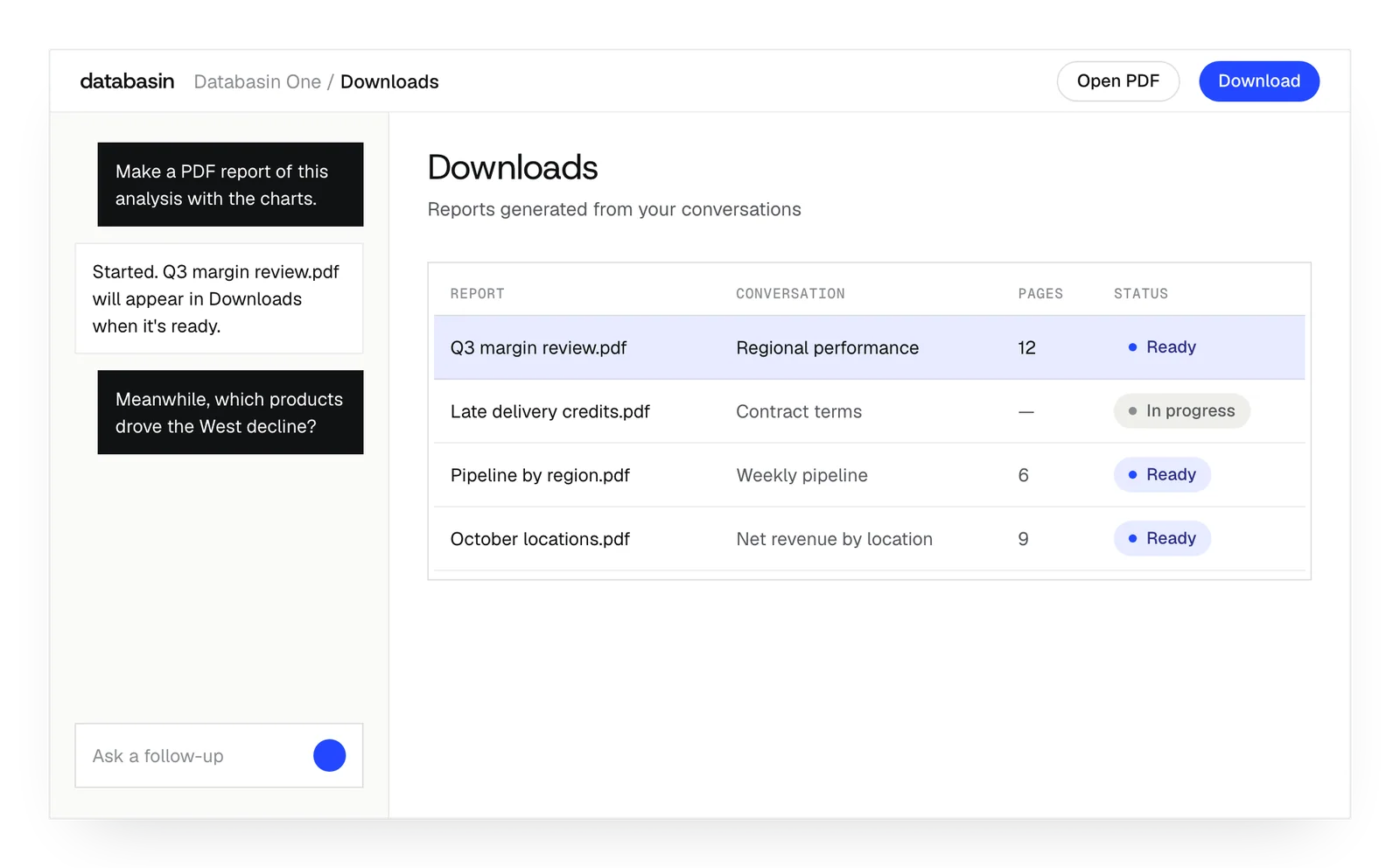
Ask about clinical activity, staffing or finances in plain language, and inspect the source behind the answer.
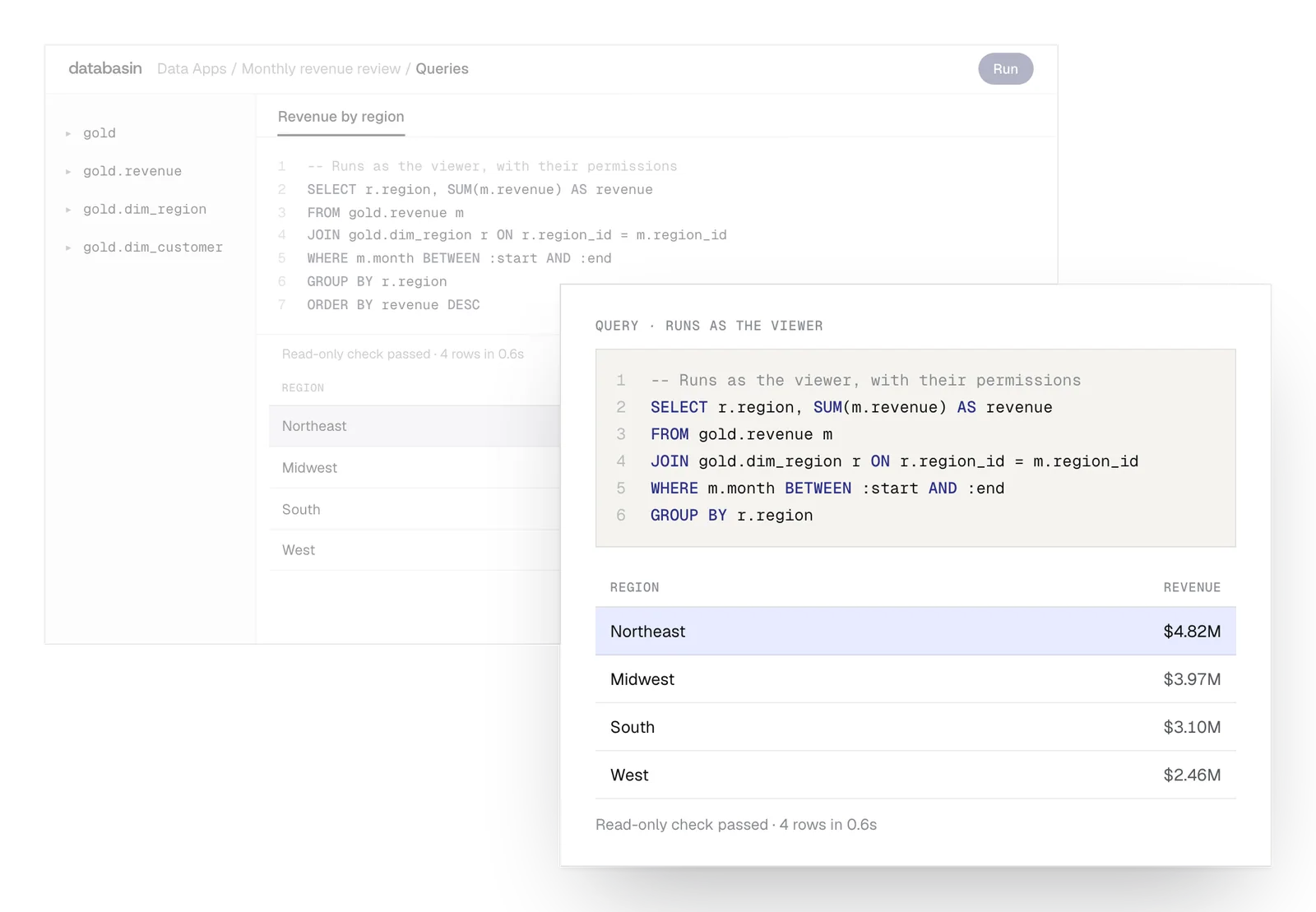
Build a departmental view by describing the measures people need to explore together.
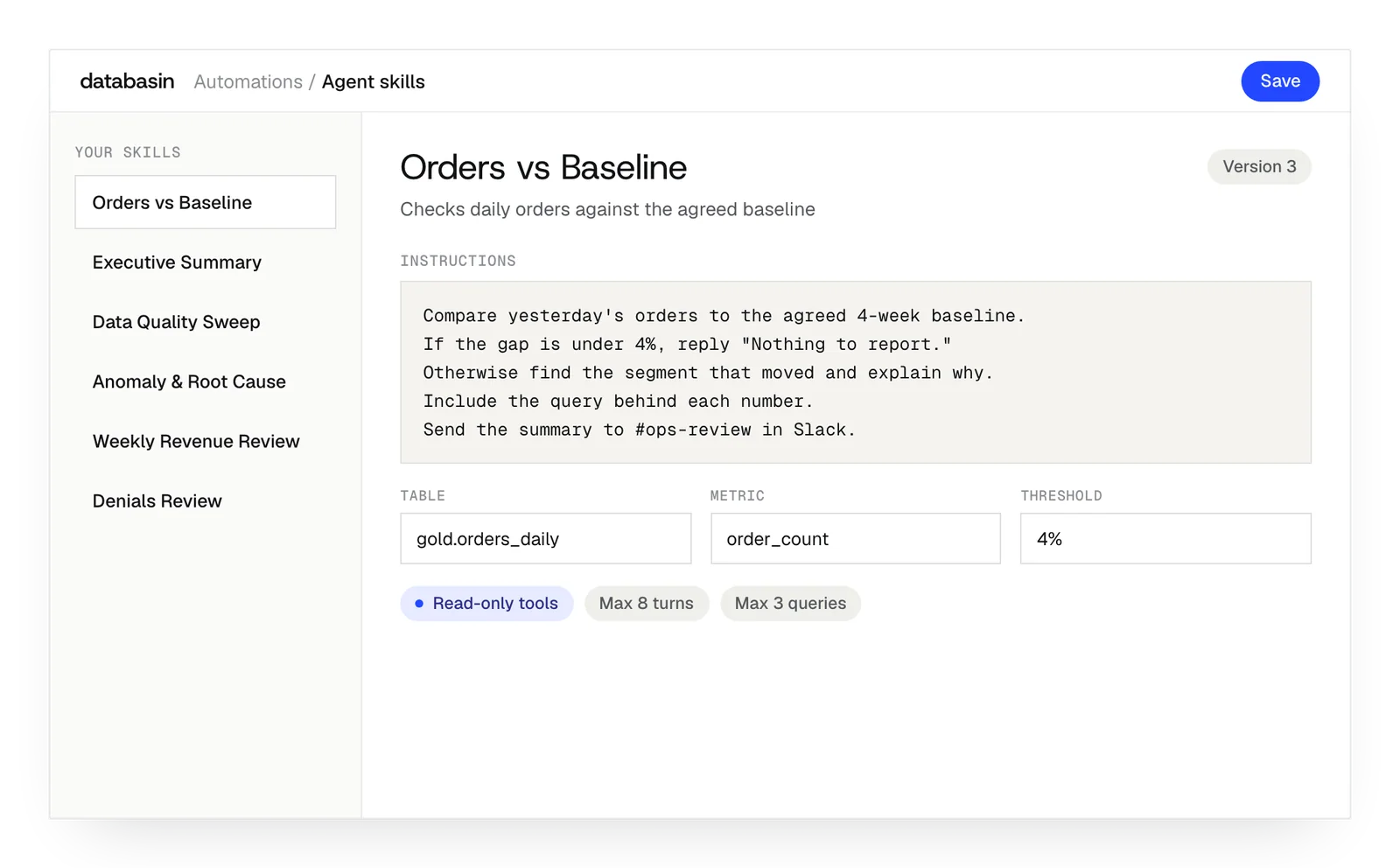
Define the changes an agent should investigate and receive an explanation with evidence to examine.
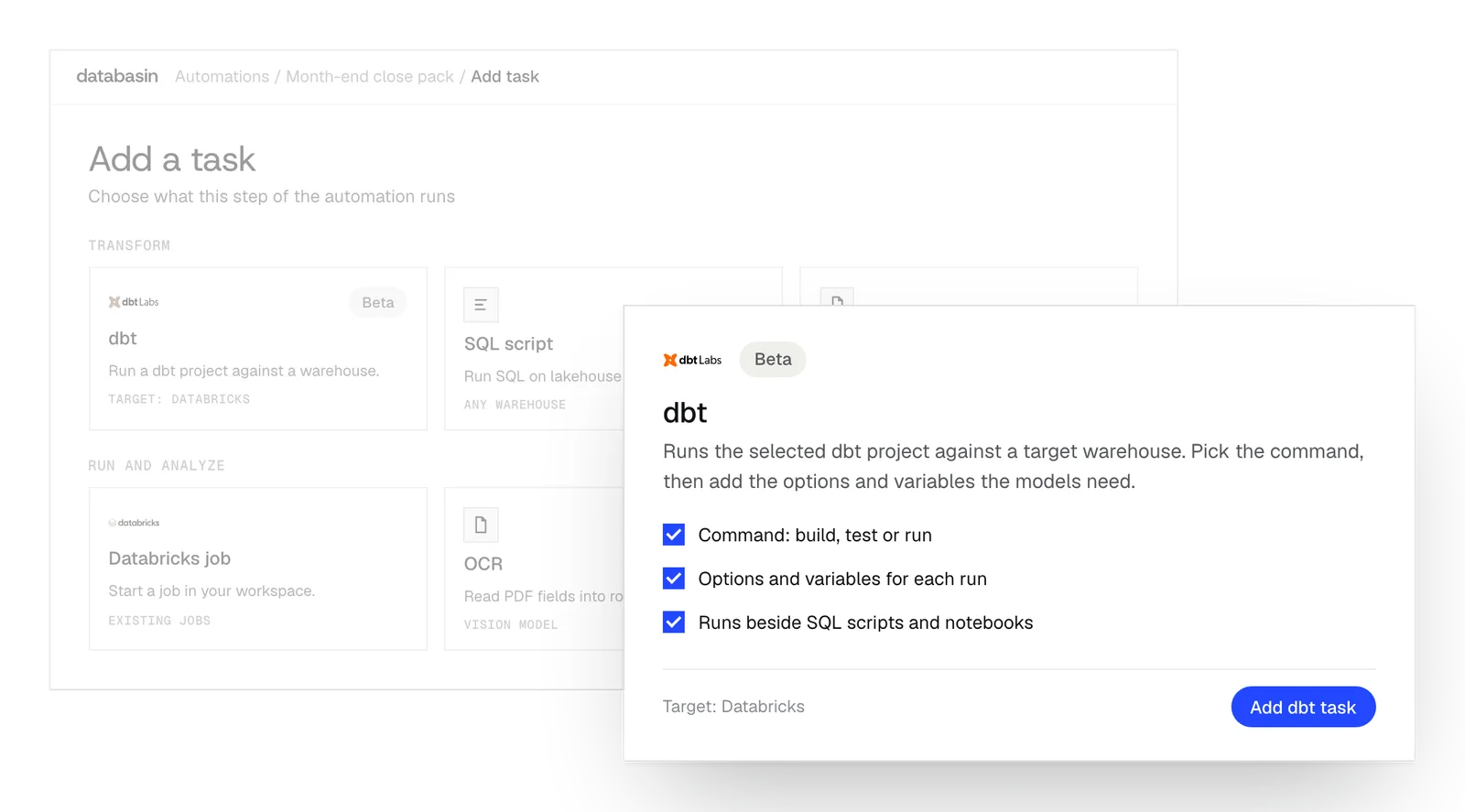
Run preparation and delivery for the recurring reviews used by finance, operations or research teams.
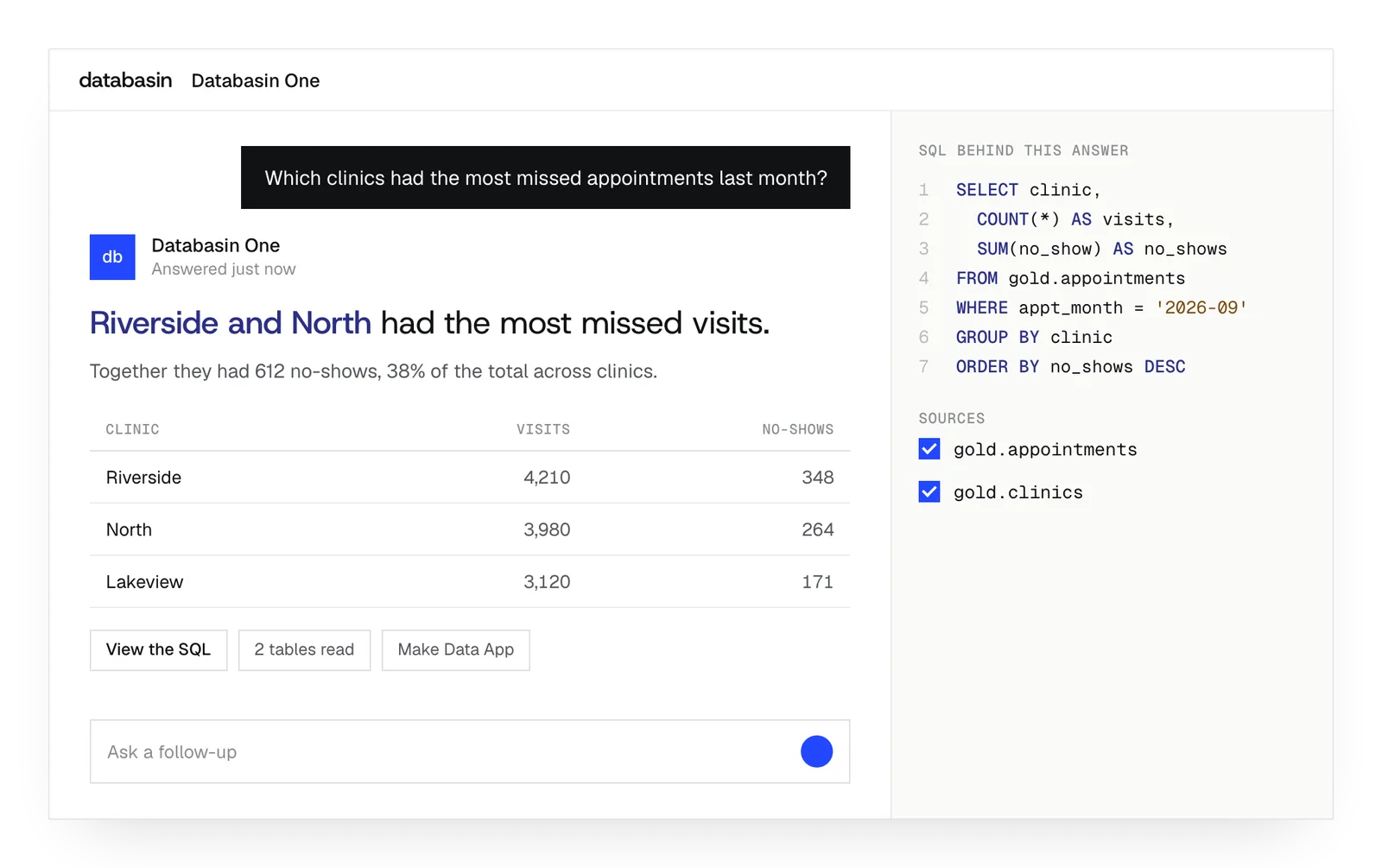
Bring permitted Epic, Workday and research data into the analysis with the definitions the teams use.
Design, Build, Run
We take responsibility for the work from defining the outcome through implementation and ongoing support.
Design
We define the outcome, current processes and expected return with your stakeholders. A working example shows how Databasin would answer your business questions.
Build
We get your first use case live in 90 days. Communication, rollout, training and success measurement are included in the work.
Run
Choose the help you need after launch. We can run the solution for you, provide monthly support hours or stay on call.
Preparing the monthly revenue-cycle review
Preparing denial and accounts receivable reports
Today
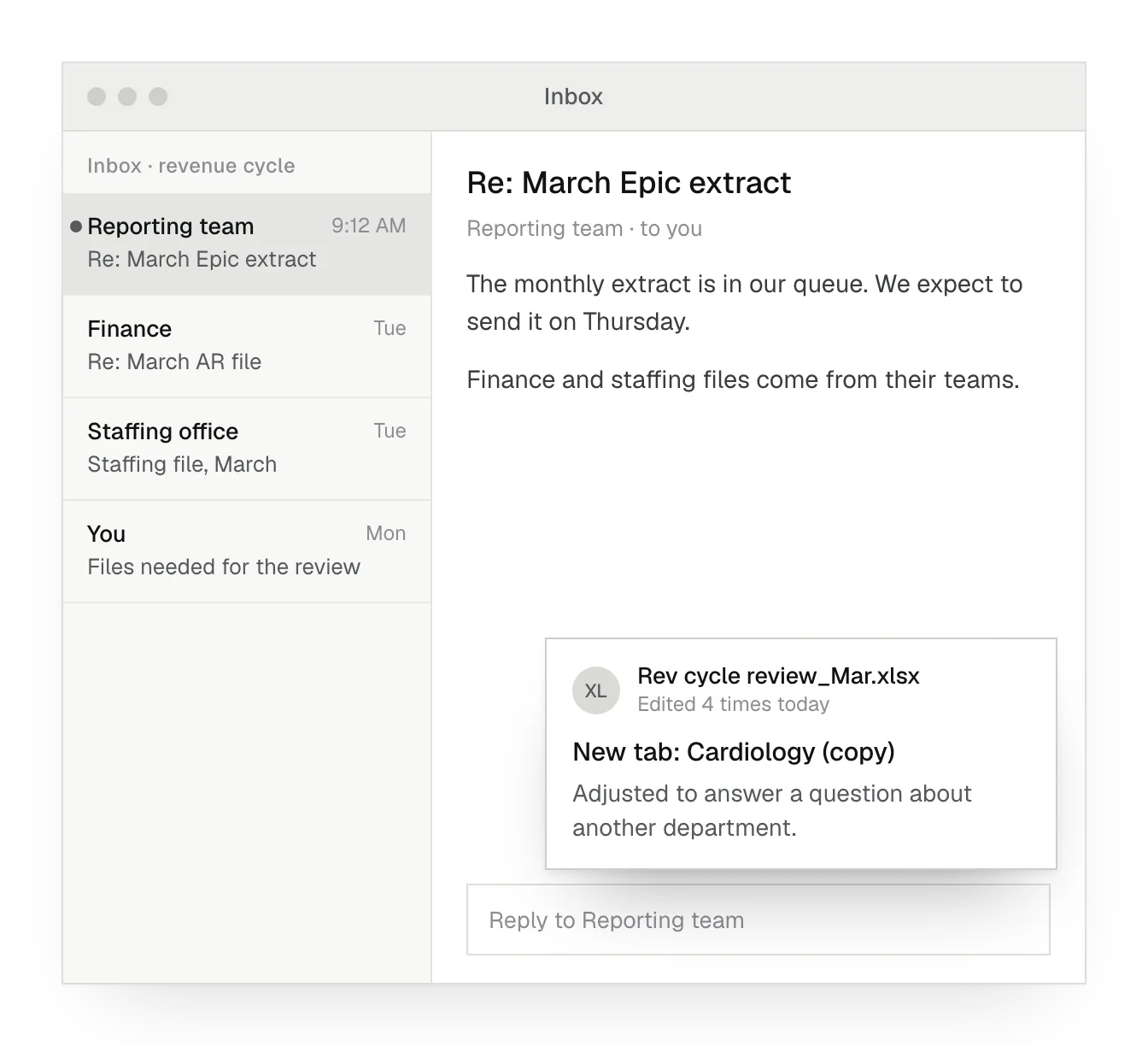
- Wait for the reporting team to supply the monthly Epic extract.
- Request the corresponding finance and staffing files from the departments involved.
- Combine the files and calculate the figures in the meeting spreadsheet.
- Adjust the spreadsheet to investigate a question about a different department.
Redesigned
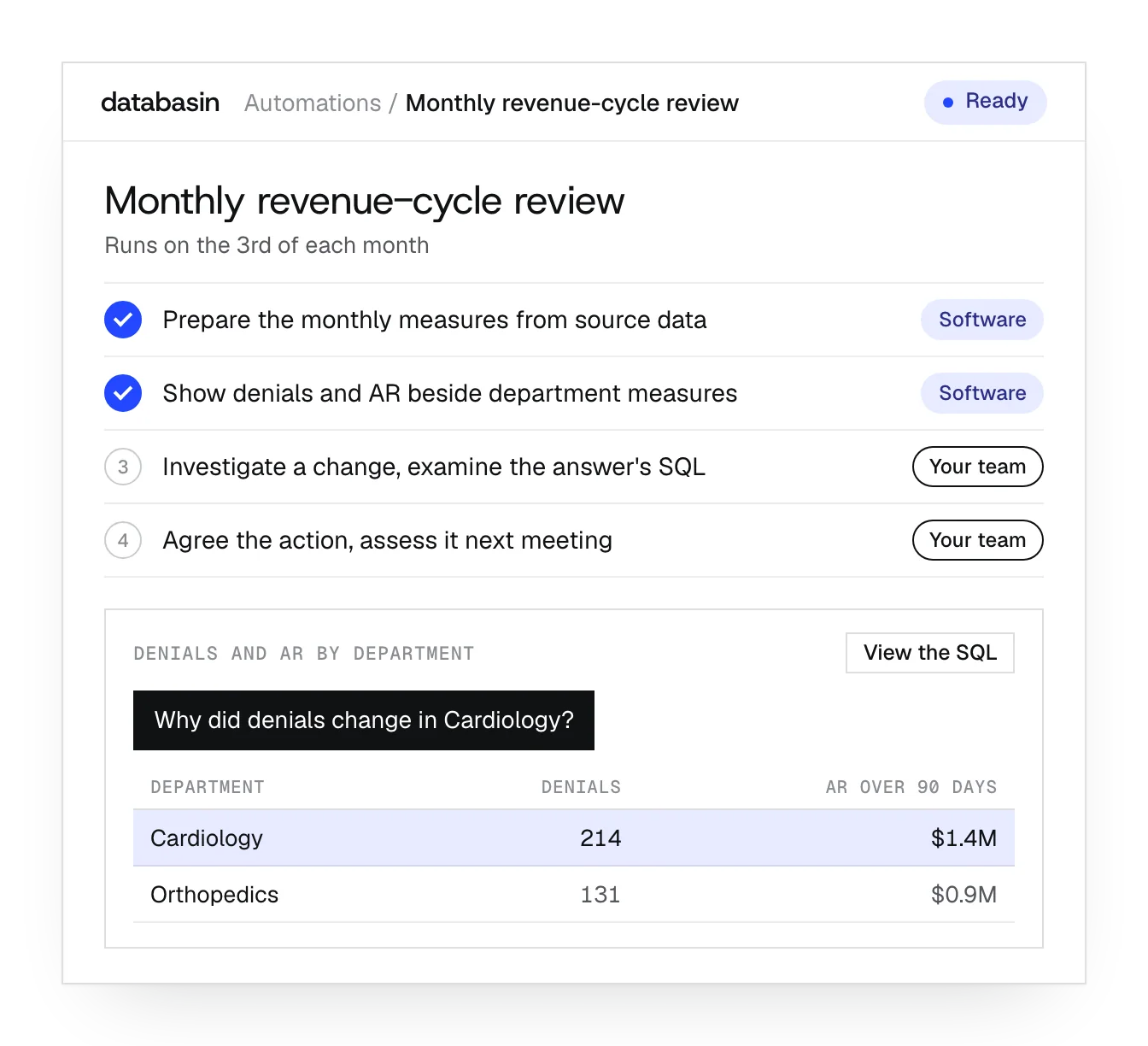
- SoftwarePrepare the monthly measures after refreshing the permitted source data.
- SoftwareDisplay denials and accounts receivable beside relevant departmental measures.
- Your teamInvestigate a change in plain language and examine the answer's SQL.
- Your teamAgree the action, then assess progress at the following meeting.
Security for business data
Databasin gives your team controls for who can use business data and records of how they use it.
Access
Your organization manages the identities people use to sign in. Data permissions apply to their work, and investigation agents have read-only access to production sources.
Regulated data
For work involving PHI or HR data, our team helps your security reviewers examine the requirements. Databasin is HIPAA-ready, with a BAA available.
Where data sits
You can use our hosted service, run Databasin in your Azure environment or use it alongside Databricks, Snowflake or Microsoft Fabric.
Audit
An answer comes with its SQL for review. Your team can also examine query logs and lineage to understand the data behind it.
The recurring performance review
The review follows four stages, with software preparing information for people to investigate and use in decisions.
Prepare the review
Your team defines the review question and reporting period. Software uses refreshed source data to prepare the measures for that review.
Investigate a change
Databasin answers the analyst's question about a change in the figures. The analyst can open the SQL and examine how it reached that answer.
Decide next steps
Leaders use the findings in a Data App to discuss what happened. Finance, operations or research teams decide how to act on them.
Repeat the review
Software prepares and sends the next review. Your team uses it to examine progress and decide what needs to change in the process.
Support across healthcare and research
Health systems
System leaders compare activity, staffing and financial performance across sites. We prepare views they can discuss with local teams, with workflows that repeat the preparation for later reviews.
Academic medical centers
Academic research teams need information from across the institution. We prepare that data for shared analysis, working with research and clinical operations to establish the access and definitions required.
Hospitals
Finance and operations staff need reports that fit their hospital work. We build those views and automate their preparation, then help staff use them through training and ongoing support.
The systems your teams already use
Epic Clarity and Caboodle
We read reporting data from Clarity and, where available, Caboodle, preparing the local tables and mappings needed for the agreed work.
Workday finance and HR
We connect Workday data with operational measures so teams can examine staffing and financial information alongside the activity it supports.
REDCap and research data
We prepare permitted research data alongside other institutional sources so researchers can explore related information together.
Healthcare experience and practical delivery
Healthcare experience
Databasin brings a principal-level team with healthcare experience. Microsoft and Databricks featured our work at HIMSS in three consecutive years: 2023, 2024 and 2025.
Prepared source data
Our work covers source connections, local mappings and calculations. We prepare these for the questions finance, operations and research teams need to answer in their work.
Validation with users
People familiar with the measures and source records review the results with us. Together, we check how the analysis supports the decision it is meant to inform.
What happens next
We would like to hear where your team wants to make progress with data and AI. We can discuss a project you have in mind or explore where Databasin could help with the work.
What happens next
Book a demo
Book a conversation about your organization and the work you want to improve. Questions about where to start are welcome.
Explore the opportunity
We show a working example that answers your business questions, then discuss what it would take to deliver it for your team.
Get the first result
After agreeing the first use case, we implement it with your team. We train the people using it and measure how it performs.
FAQ
Will our denial and accounts receivable reports still be a day behind?
Yes, when the data comes through a nightly Clarity refresh. We can automate the preparation that follows it, but events must reach the source before they can appear in analysis. We set the review timing and show its reporting period so readers understand which events it covers.
How do we resolve different numbers across departments?
First, establish what each department's measure includes. We work with the measure owners to define that scope and apply it in the prepared data. Analysts can then examine the source, calculation and reporting period behind differing figures to understand what accounts for the discrepancy.
How can we check a result before relying on it?
Compare the result with the source records and the definition of the measure. Databasin shows the SQL behind an answer so analysts can examine its calculation. We review results with your team, including the reporting period, departmental mappings and any exclusions that affect what the figure means.
Can we analyze Epic and Workday together?
Yes. Epic reporting data and Workday finance and HR data can be used in the same analysis. We work with your analysts to map the departments, reporting periods and measures. Those relationships determine how the combined view answers the question your team needs to investigate.
Can we keep our existing BI reports?
Yes. Existing BI tools can use the data we prepare. We examine the reports people depend on and the work required to maintain them. The project can retain familiar views and introduce Data Apps or plain-language questions where they help the team investigate the information.
How does this support collaboration between research teams?
We prepare data that authorized researchers can analyze together. Their questions determine the views and definitions, and we establish access with the teams involved. Researchers can ask in plain language and examine the source and SQL, then interpret the findings and decide how to use them.
Who should be involved in the first project?
The owner of the work and the people preparing and using the information should be involved. Data, Epic and security owners establish the access requirements. With that group, we plan the process, training and success measures, and agree who takes responsibility for ongoing use.