A simpler modern data stack
Databasin simplifies the modern data stack so your team can spend less time connecting tools and more time using the results. We combine data preparation, governance, analysis and workflows on our platform. Our team identifies the work to change, implements it and supports the people who depend on it.
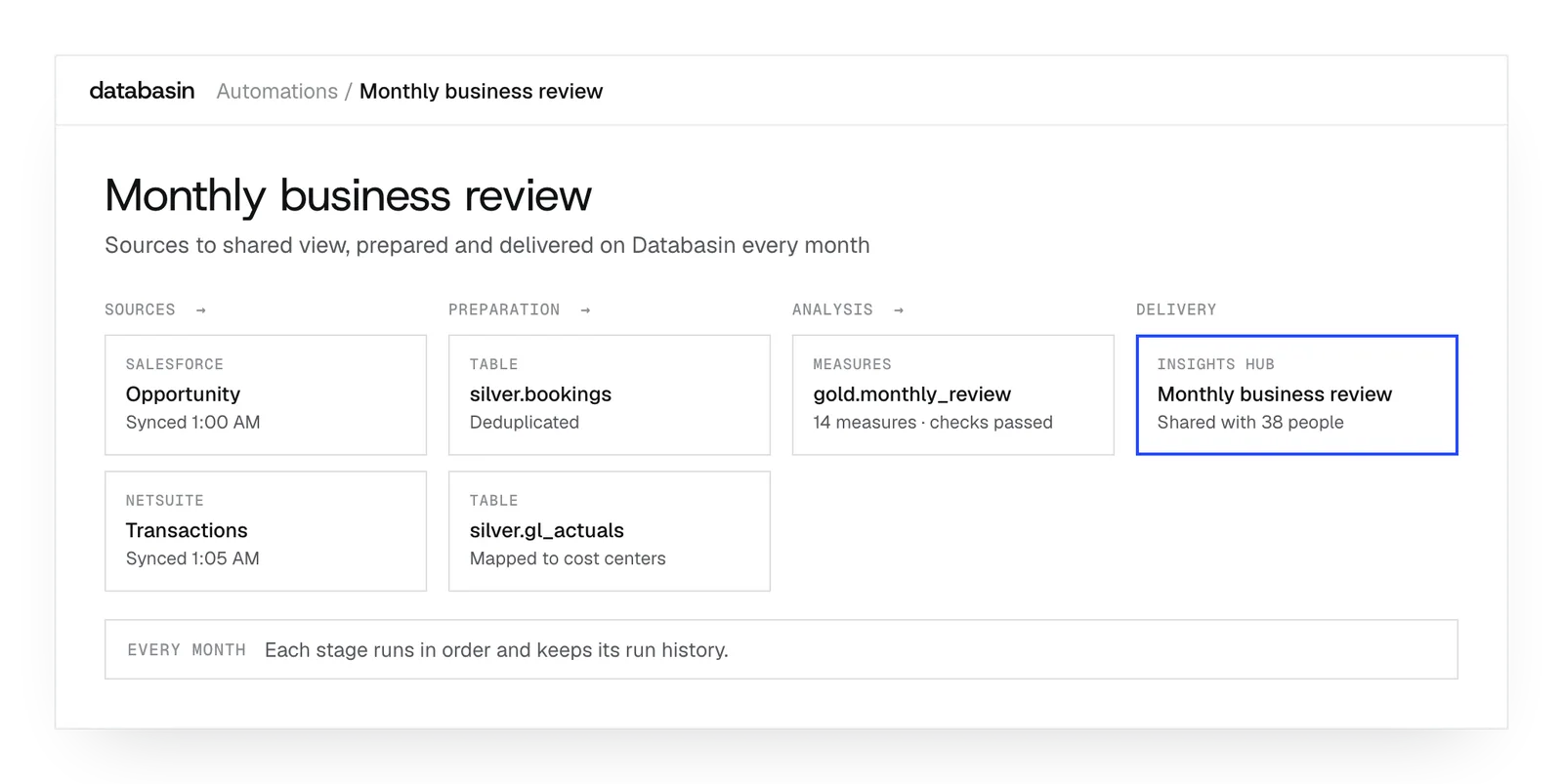




More analysis from the systems you have
We build and maintain the preparation that business analysis depends on. Our team connects sources, defines the calculations and creates the views people need. Some projects bring overlapping functions onto Databasin; others complete a platform already in place. In both cases, we take on the agreed technical work so analysts can use the results.
The platform behind the work
People can ask questions, build Data Apps and automate recurring work using the data connected through Databasin.
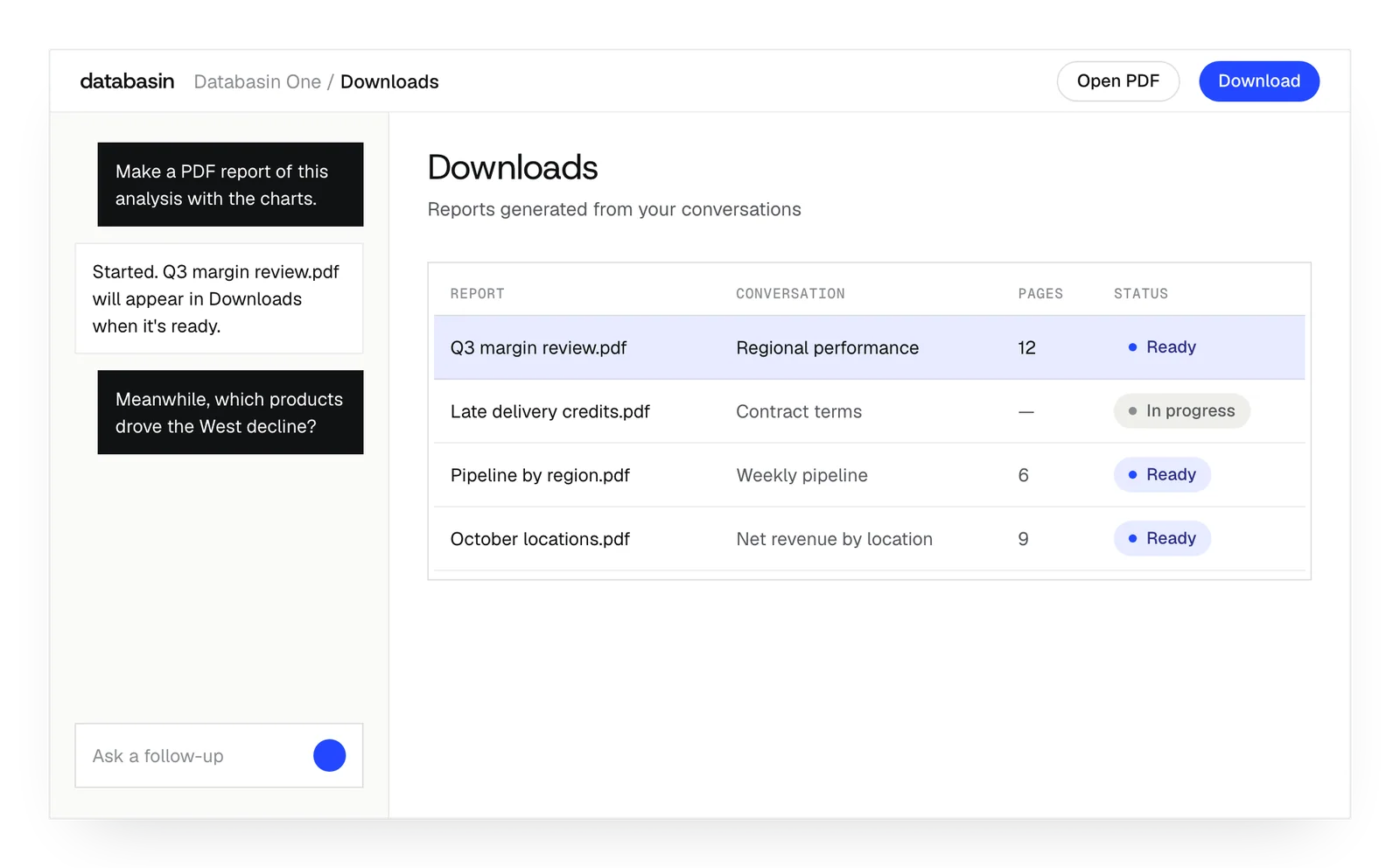
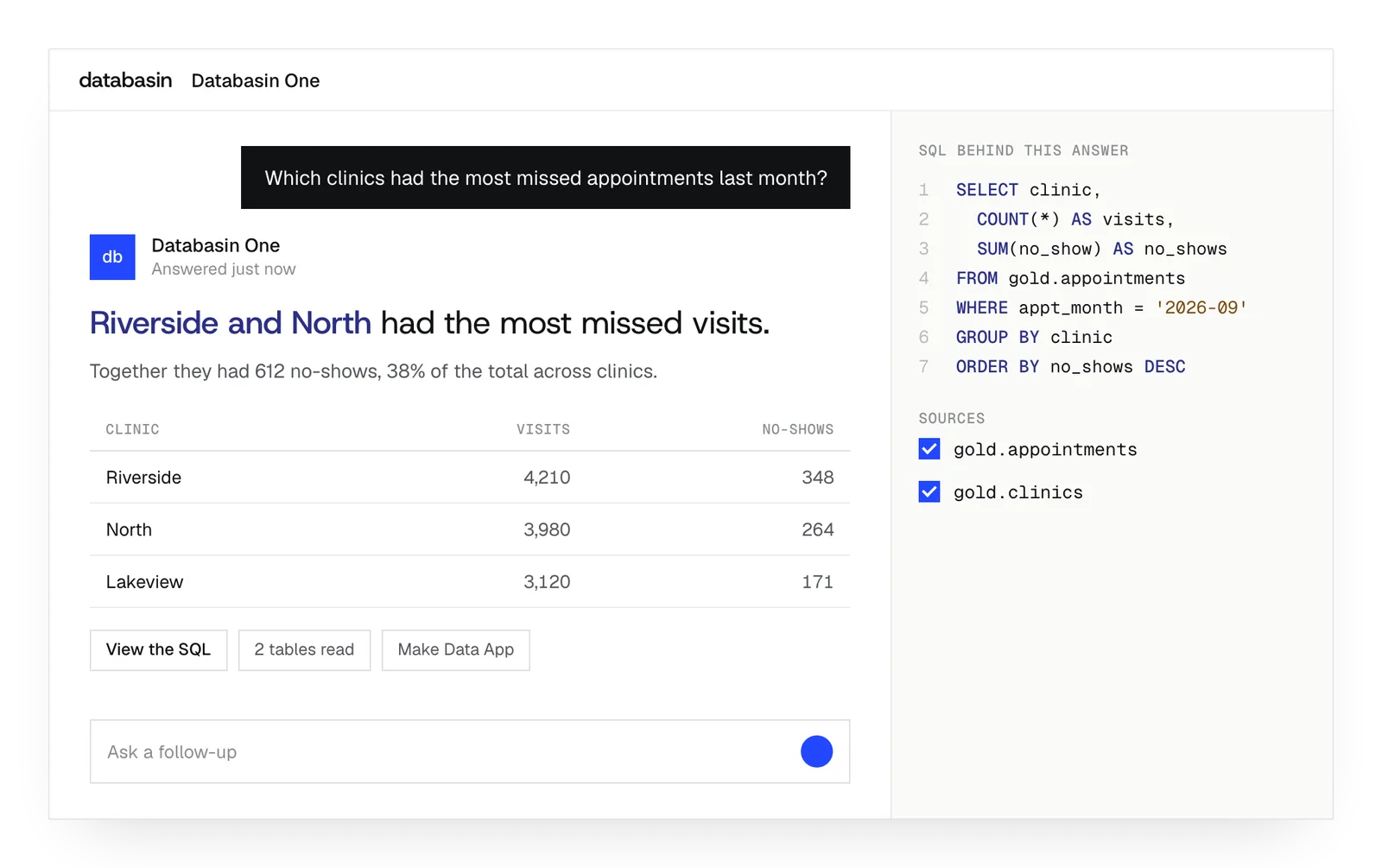
Ask a question of the prepared data and inspect the SQL that produces the answer.
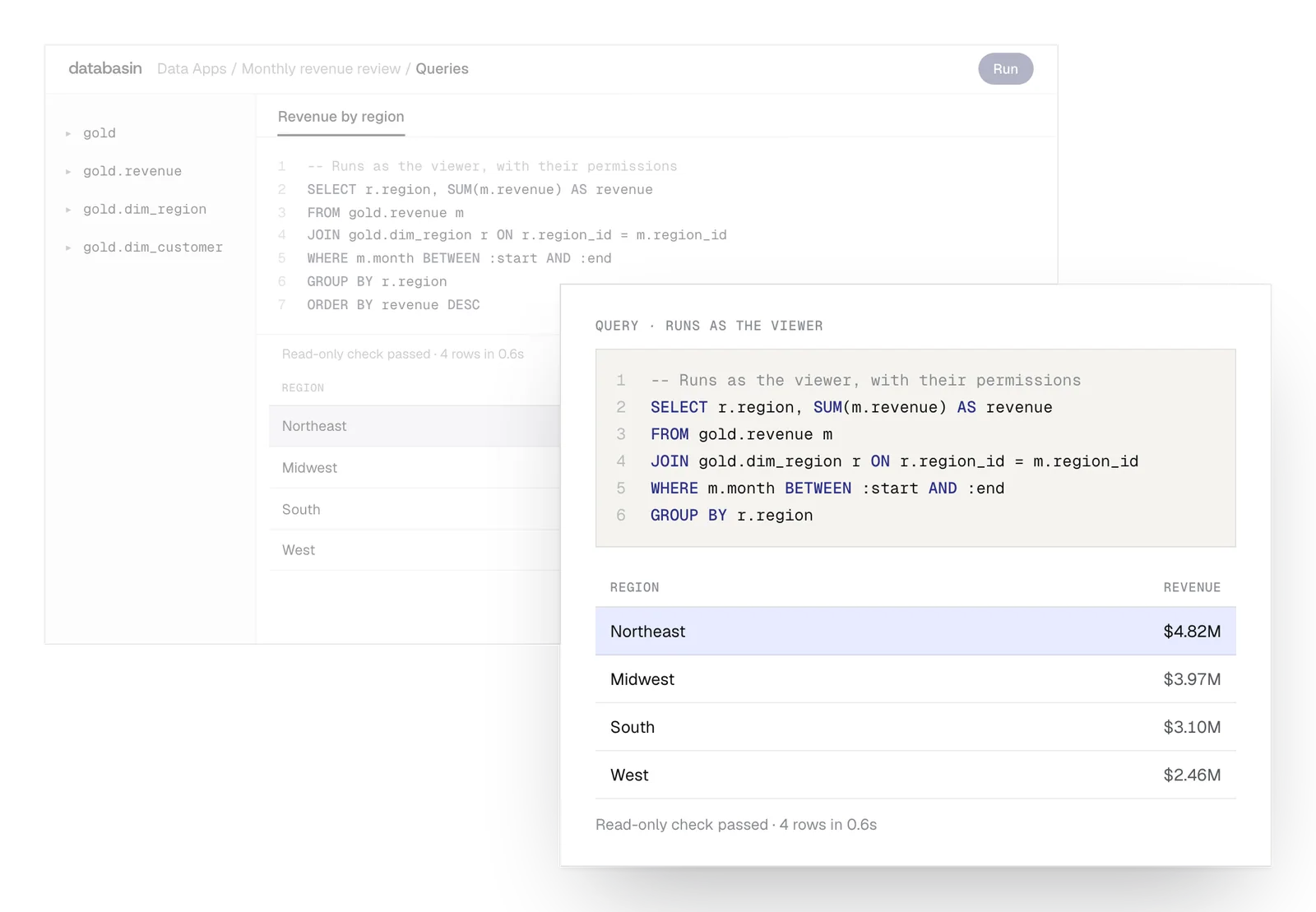
Build a view around a team's measures and let its users change it through plain language.
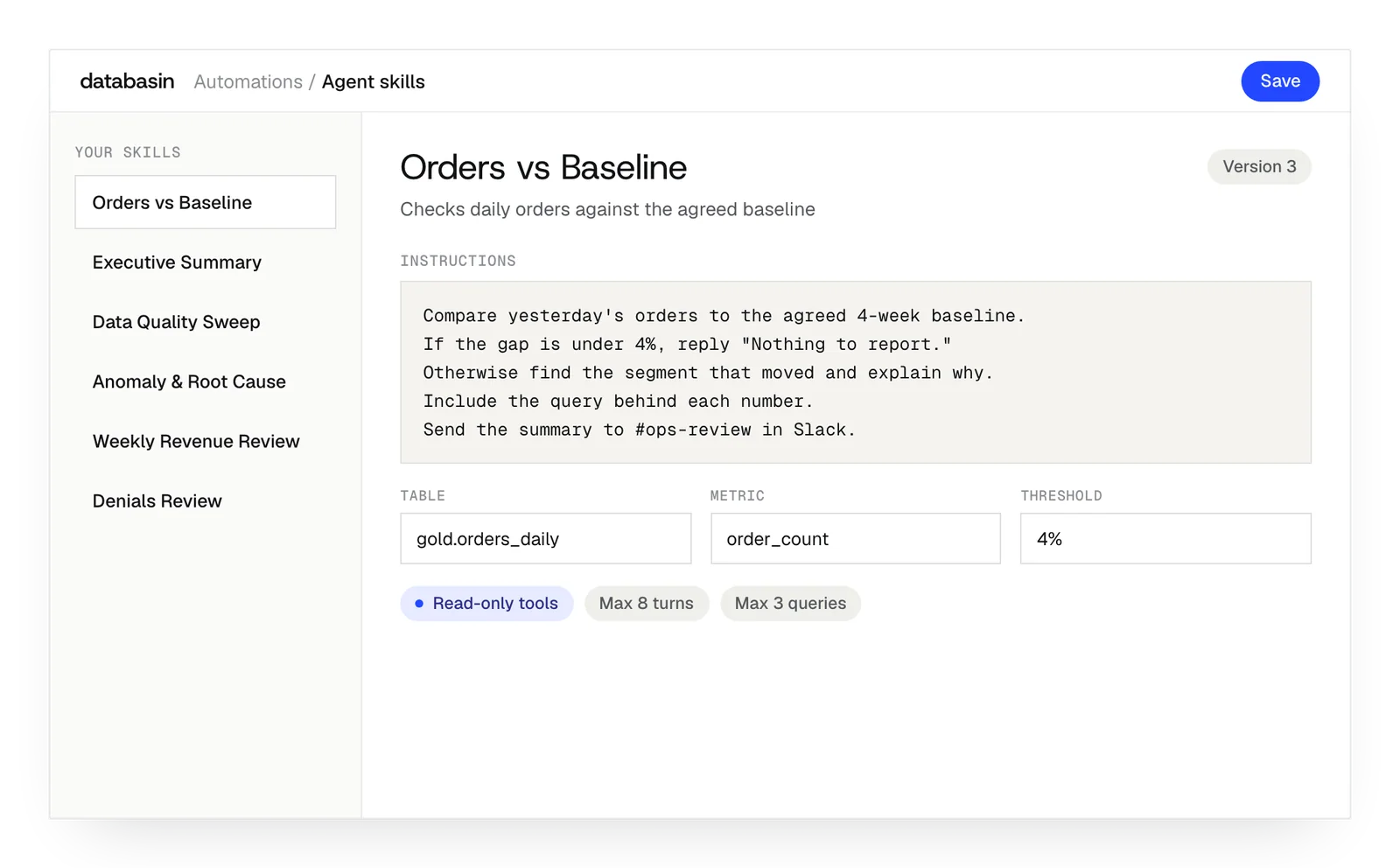
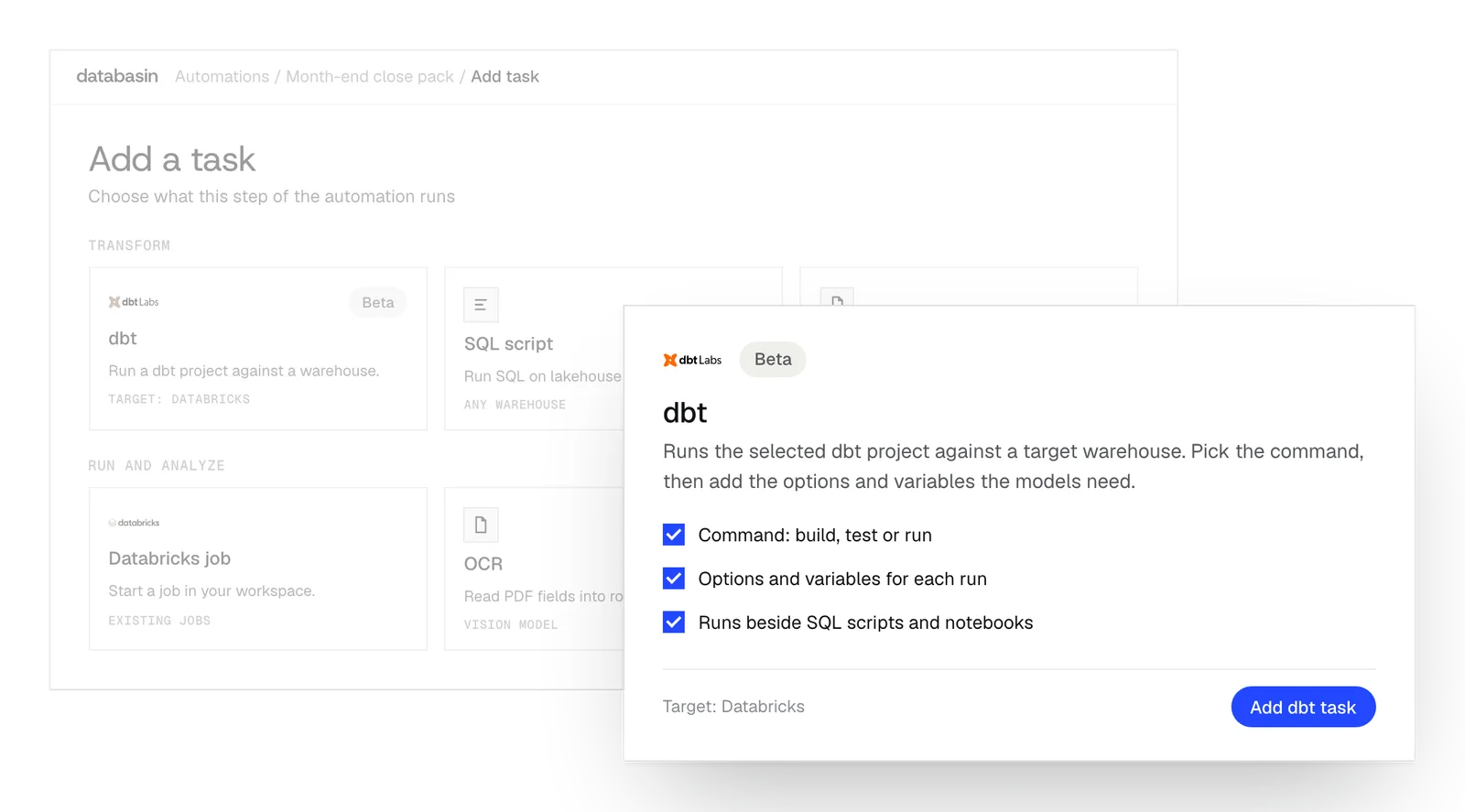
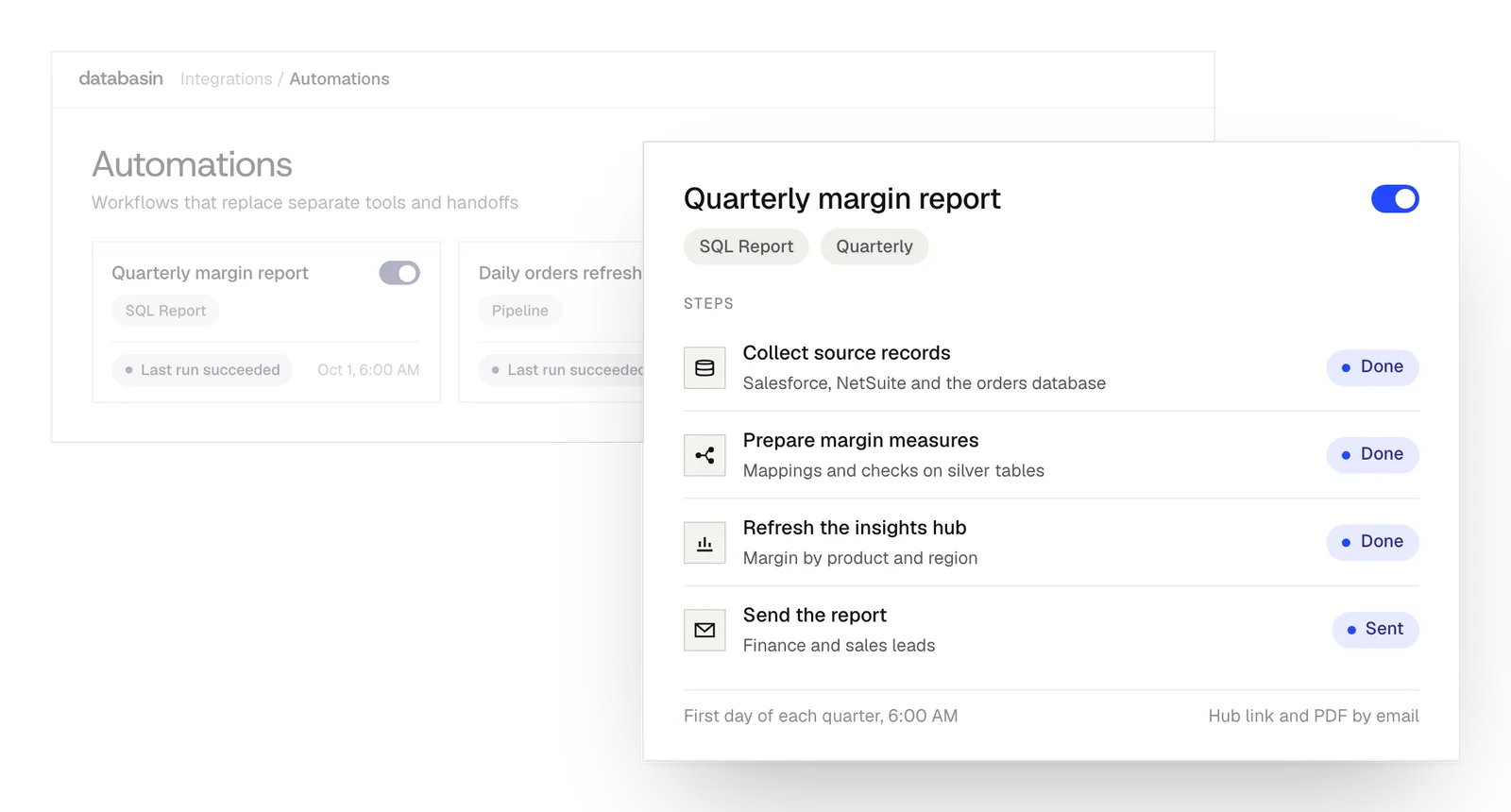
Arrange preparation, analysis and delivery in a workflow that runs on a schedule.
Prepare connected records for analysis under the business definitions and permissions set for the work.
Design, Build, Run
We take responsibility for the work from defining the outcome through implementation and ongoing support.
Design
We define the outcome, current processes and expected return with your stakeholders. A working example shows how Databasin would answer your business questions.
Build
We get your first use case live in 90 days. Communication, rollout, training and success measurement are included in the work.
Run
Choose the help you need after launch. We can run the solution for you, provide monthly support hours or stay on call.
Simplifying the work behind business analysis
Databasin can help at different points in the work: when tools overlap, when a rollout stops before users get an answer, or when preparation consumes the team's time.
Overlapping tools
The team maintains several products and the custom connections needed to move data between them for each business output.
We build the required functions together and check which connections the new workflow replaces. Your team can retain specialist tools where their capabilities are still needed.
An unfinished platform rollout
A platform rollout has delivered infrastructure, while the people who need its data are still waiting for useful analysis.
We complete the source connections, business definitions and applications in the retained environment. Training and ongoing support help people use the work once it is ready.
Recurring maintenance
Analysts who know the data spend their time fixing pipelines and assembling the same files before each business review.
We automate that preparation and take on the maintenance covered by the engagement. Analysts can use the prepared view to investigate a question at the next meeting.
Results from customer work

- 20+ systems unifiedDatabasin brought WashU Medicine's financial data together.
- Infrastructure costs at 1/3 of the traditional approachWashU Medicine's result from changing its data infrastructure.
18%
Higher grant proposal success
Measured at a research institution working with Databasin.
“What used to take weeks or sometimes even months now happens in minutes.”
Deliverables for simpler data operations
Process map
The map shows the path from source records to a business review and names the preparation and delivery tasks Databasin handles.
Prepared business data
Prepared records give analysts a basis for comparison, with the source and calculation available when they need to explain the result.
Data Apps
Teams work through their measures in a shared view. They can ask in plain language for a different presentation of the data.
Recurring workflows
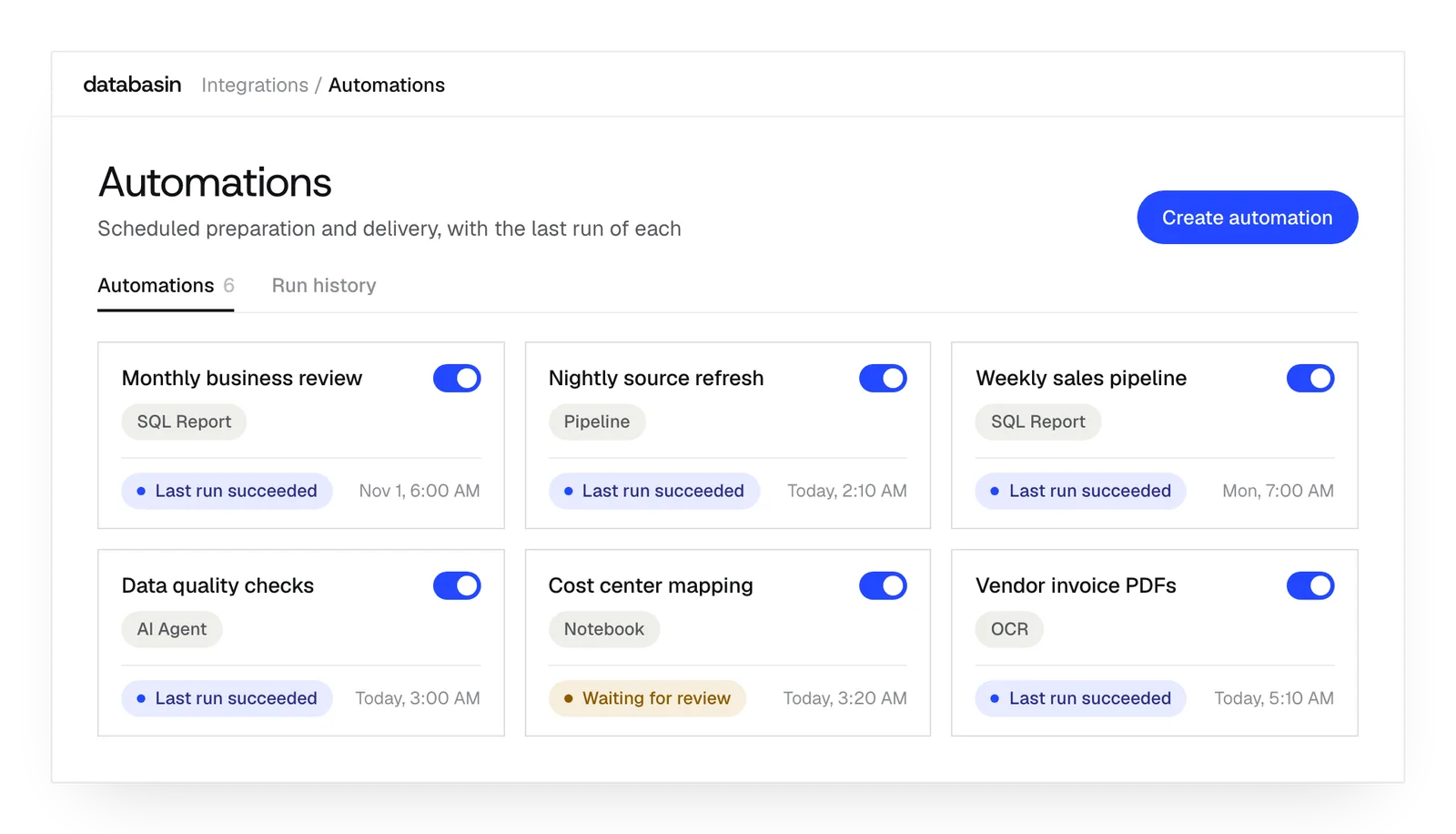
The recurring workflow prepares the review and sends it. Operators can inspect its history to find where a run failed.
Operating responsibilities
The arrangement specifies the work our team will operate, support or improve and how that responsibility continues after the first rollout.
Organizations this work supports
Health systems
Health systems can retain their source applications and use shared preparation to support recurring analysis across clinical, financial and operating records.
Higher education
Universities can prepare institutional records for finance, HR and research offices on shared infrastructure, helping each team use the resulting analysis.
Finance and HR
Finance and HR can work from automatically prepared extracts and calculations, then use the relevant historical records to examine changes in staffing and performance.
Growing companies
Mid-size companies can give managers useful analysis while Databasin handles implementation and operation, reducing the work their own technical staff need to absorb.
Private equity
Portfolio teams can examine operating performance across company records. Databasin prepares the data and builds the views they use for those recurring discussions.
Retail and grocery
Retail teams can prepare stock and sales together for a store review, then let managers explore the differences that need attention.
Nonprofits
Nonprofits can bring program activity and spending into one review. Our team handles the connections and preparation that make the comparison possible.
Connections to the systems you keep
Databricks, Snowflake and Fabric
We can keep these environments and complete the source connections, analysis and workflows the business needs around them.
Business source systems
We read the required records from systems such as Epic, Workday, SAP and Salesforce using connectors, APIs or database access.
BI tools and notebooks
Prepared records can feed Power BI, Tableau and notebooks. Users can keep those tools while Databasin changes the work supplying their data.
What happens next
We would like to hear where your team wants to make progress with data and AI. We can discuss a project you have in mind or explore where Databasin could help with the work.
What happens next
Book a demo
Book a conversation about your organization and the work you want to improve. Questions about where to start are welcome.
Explore the opportunity
We show a working example that answers your business questions, then discuss what it would take to deliver it for your team.
Get the first result
After agreeing the first use case, we implement it with your team. We train the people using it and measure how it performs.
FAQ
When is assembling specialist tools the better choice?
A specialist tool may be worth keeping when the business depends on a capability it provides. The work also needs someone to maintain its connections and support its users. We examine both during design and can build Databasin around tools that continue to serve that purpose.
Our Databricks usage keeps growing, but answers still take weeks. Where should we start?
We start by following a delayed answer back through its preparation. The obstacle may be access, a missing definition or a manual step between systems. Finding that obstacle lets us design the work around Databricks so users can get the analysis the platform was meant to support.
Our Snowflake renewal is approaching. Does consolidation mean replacing it?
No. Snowflake can remain the warehouse. We examine the outputs it supports and the work needed to produce them, including the surrounding tools and manual preparation. Your team can then decide which parts to retain, with Databasin implementing the changes needed around that environment.
How do we decide which tools can be retired?
We identify what people rely on the tool to do, then check that the new workflow covers it. That review includes the output, access controls and ongoing operation. Your team can retire the tool after verifying the replacement, with the dependencies understood before the change.
How would we measure the improvement?
We measure the current work first and agree what improvement matters. That could be preparation time, recurring maintenance or the wait for an answer. After rollout, the team compares the same measures with that baseline. The comparison shows where the new process has changed the work.
Can data consolidation software also help business users investigate the result?
Yes. Databasin gives users plain-language questions and Data Apps on the prepared records. They can follow a question into the figures and inspect the SQL behind an answer. We build the definitions and help people use the views in the business reviews the project is intended to improve.
What happens to the data if we later change tools?
The lakehouse stores data in open table formats, which compatible tools can read. Your team can therefore use the records beyond one application. Design establishes the deployment, storage and access arrangement, including how that data will be managed and supplied to the analysis that needs it in your environment.