Everything between your data and the people who need it.
The people who need answers are usually the furthest from the data. They wait on a ticket, an analyst or an export from one of the half-dozen tools in between.
We built Databasin to close that gap. It connects your systems, keeps one copy of the data, and lets people get answers and build reports by asking in plain English.
$50 credit · No card needed · Cancel anytime
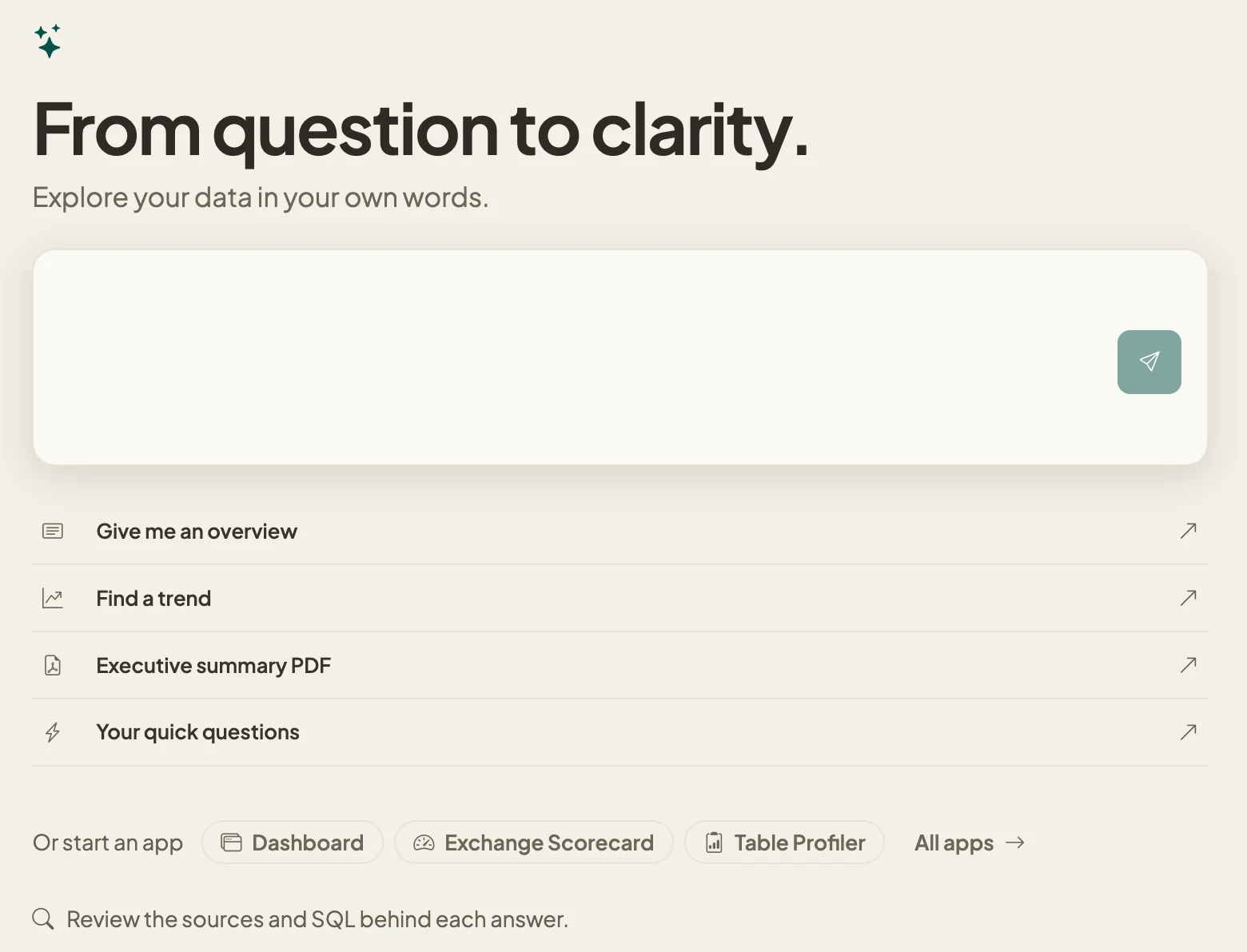
Is this week’s pipeline actually better than last week’s?
She types the question the way she’d say it. Databasin One writes the SQL against clean, business-ready tables, runs it, and answers in two lines with a chart.
Every answer includes the SQL behind it. If a number looks off, anyone can open the query and see where it came from, so the team can trust the number and get on with the decision.
How Databasin One answers →Can I stop rebuilding the board report every quarter?
Upload the Power BI file once. Data Apps lays it out on your live tables, translates the calculations, and tells you what it couldn’t carry over. After that you change it by asking: “move the trend to the top.”
It works the same on Workday, NetSuite or anything else you’ve connected. Everyone who opens the link sees today’s numbers, limited to what they’re allowed to see.
How Data Apps work → Finance and HR on Workday →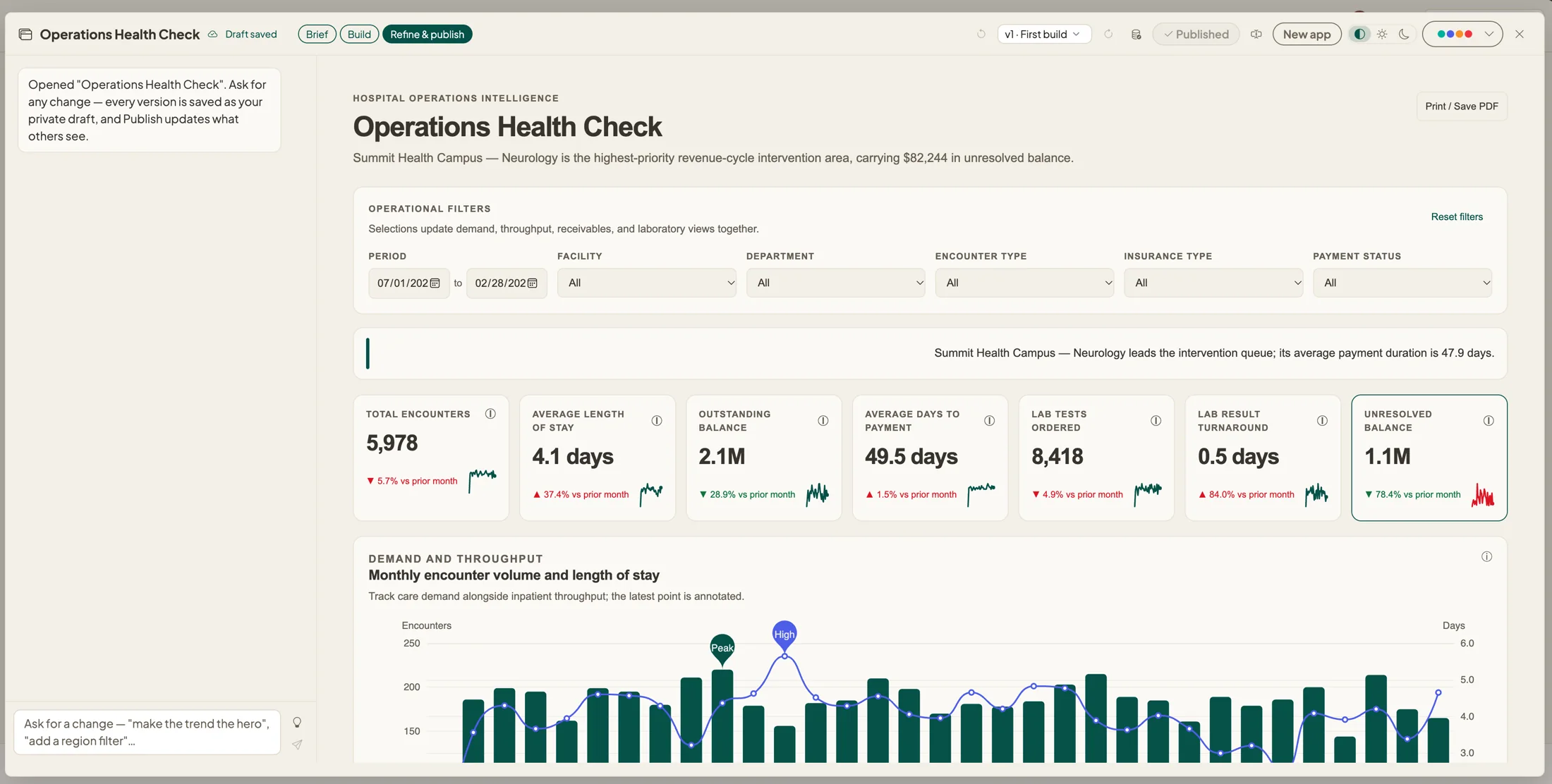
Do today’s orders look normal?
You don’t have to check by hand. Write the job down once in plain English: what to look at, what counts as unusual, who to tell. An agent runs it every morning and stays quiet when nothing’s wrong.
When something moves, it says which segment, which source, and shows the query that proves it. It can read your tables. It can’t change them.
How agents work →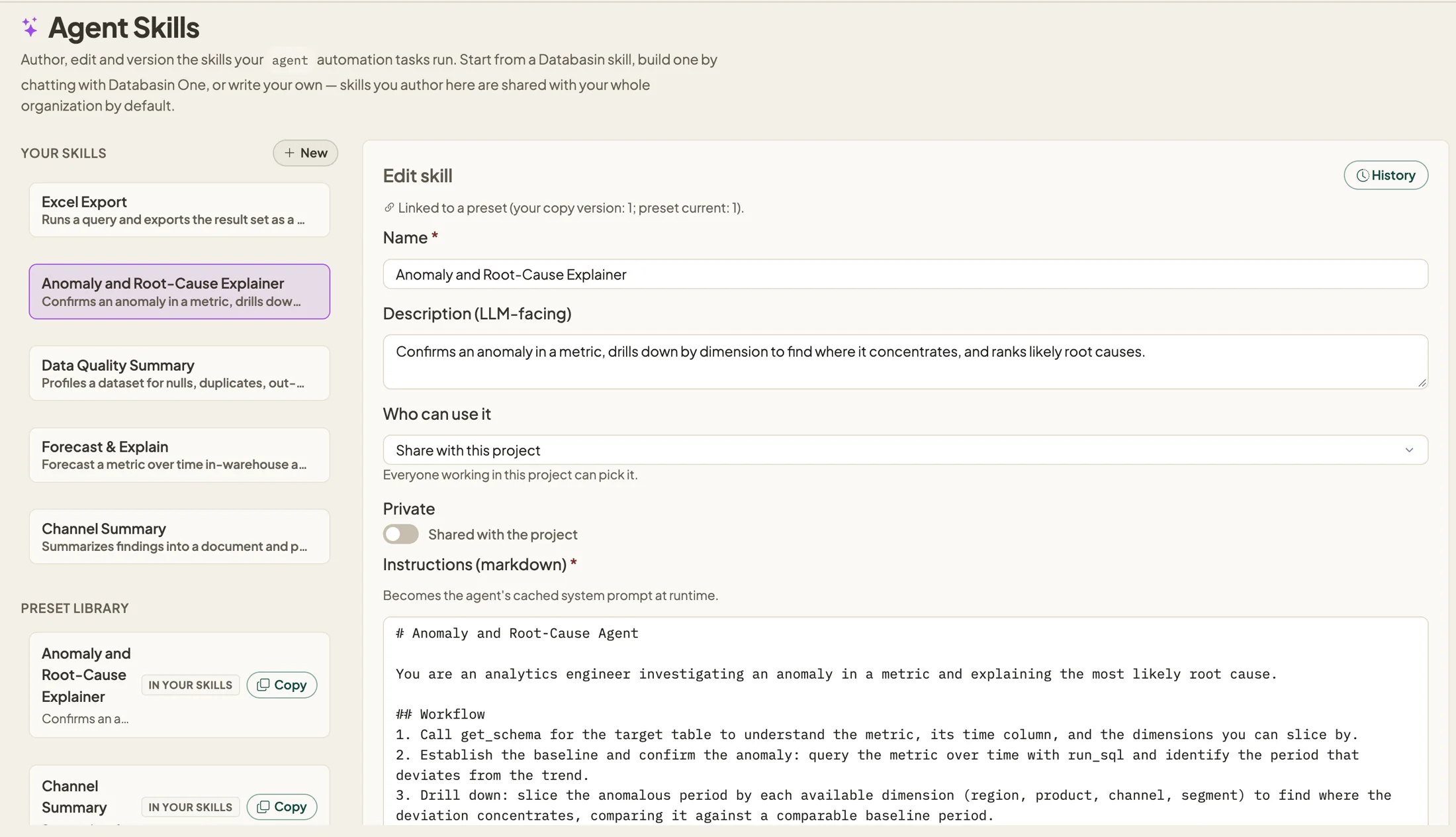
Can we keep one copy of the data instead of five?
Connect HubSpot, NetSuite or an on-premises SQL Server and query it the same minute, live. Anything worth keeping becomes a scheduled pipeline into open Iceberg tables, a format any engine can read.
About 30 sources arrive already modeled, so questions run against clean tables on day one. When a vendor changes their API, we fix the connector before it reaches you. The others connect too; they just take a little more setup, and we’ll tell you up front which is which.
All 75+ connectors → Where your data lives →Where does our data live, and who can see it?
We run it for you, and one set of permissions decides who sees what, whether they ask from a Data App, Tableau or a notebook. Every query is logged, and your tables are kept in an open format, so you’re never locked in.
We started inside an academic medical center, so PHI was the first data it ever touched. If your rules say the data can’t leave your walls, we can install the same product in your own Azure instead.
Security and deployment →What will this actually cost us?
You start with $50 of credit and no card. After that you pay for the minutes things run, and nothing while they’re stopped. There are no seats, so invite everyone who has a question.
Every rate, and an estimate for your team →How Databasin fits together
Connectors, the lakehouse, Databasin Sail and Data Apps all work on the same tables. Data you connect once is ready for a Data App, a question or a scheduled report, without copying it from tool to tool.
about 30 arrive modeled
For the technical readerHow it’s builtDatabasin SailThe lakehouse
Databasin began inside Washington University School of Medicine, where the data team spent most of its time moving data from one system to another and very little of it answering the questions the data was collected for. We kept meeting people stuck in that same queue.
So we built the thing we wished we’d had, and we still run every demo ourselves. If something on this site doesn’t match what you see in the product, tell us. We read every message.
Start with the report your team waits on most.
$50 credit · No card · First answer in about five minutes