How a Databasin engagement runs
We help your team put a business improvement into daily use, from defining the outcome to training people and supporting the result. Our principal-level team builds on Databasin and adapts the process around it. You get a working application and a way to measure what changed.




Results from customer work

- 20+ systems unifiedDatabasin brought WashU Medicine's financial data together.
- Infrastructure costs at 1/3 of the traditional approachWashU Medicine's result from changing its data infrastructure.
18%
Higher grant proposal success
Measured at a research institution working with Databasin.
“What used to take weeks or sometimes even months now happens in minutes.”
The platform behind the work
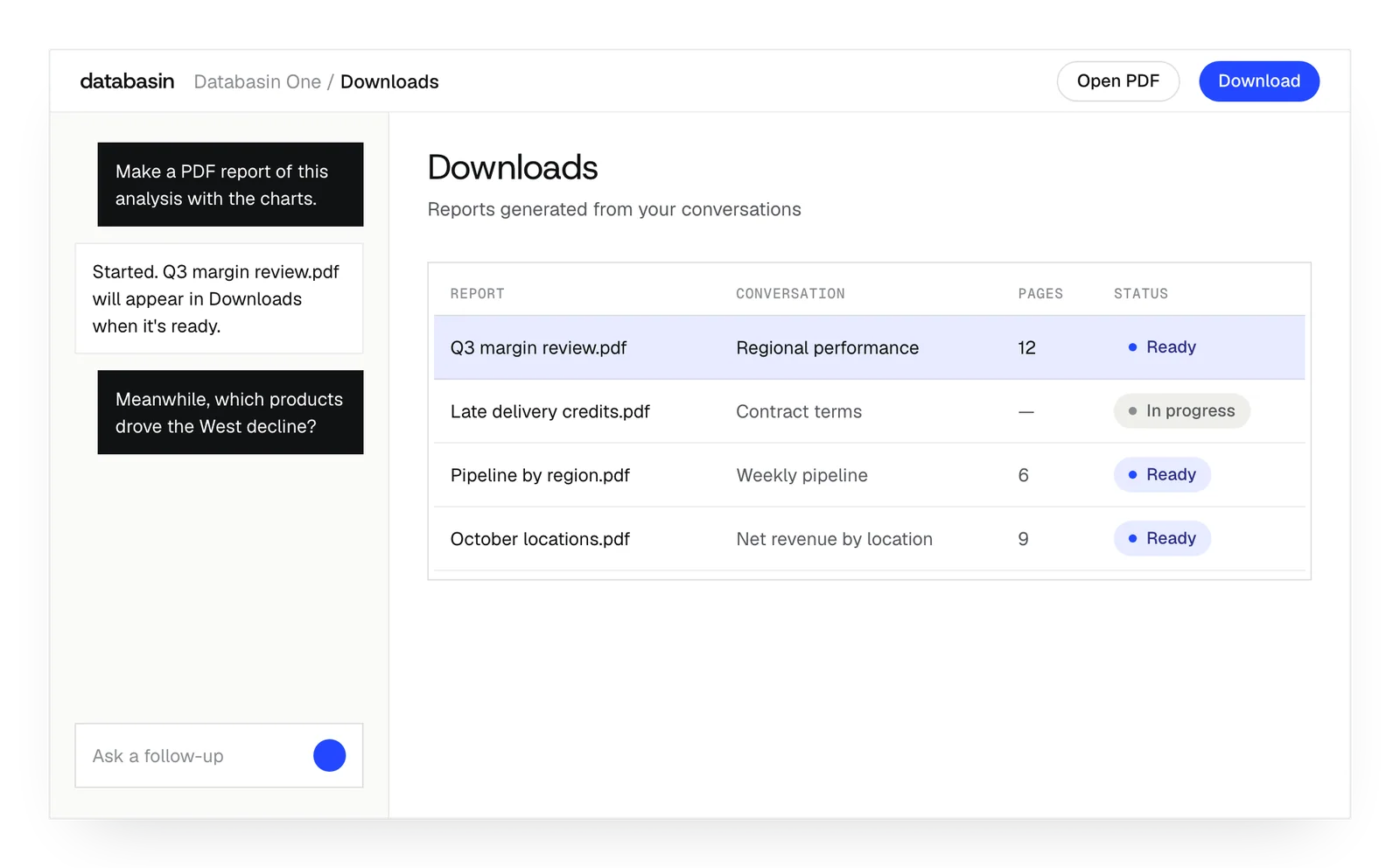
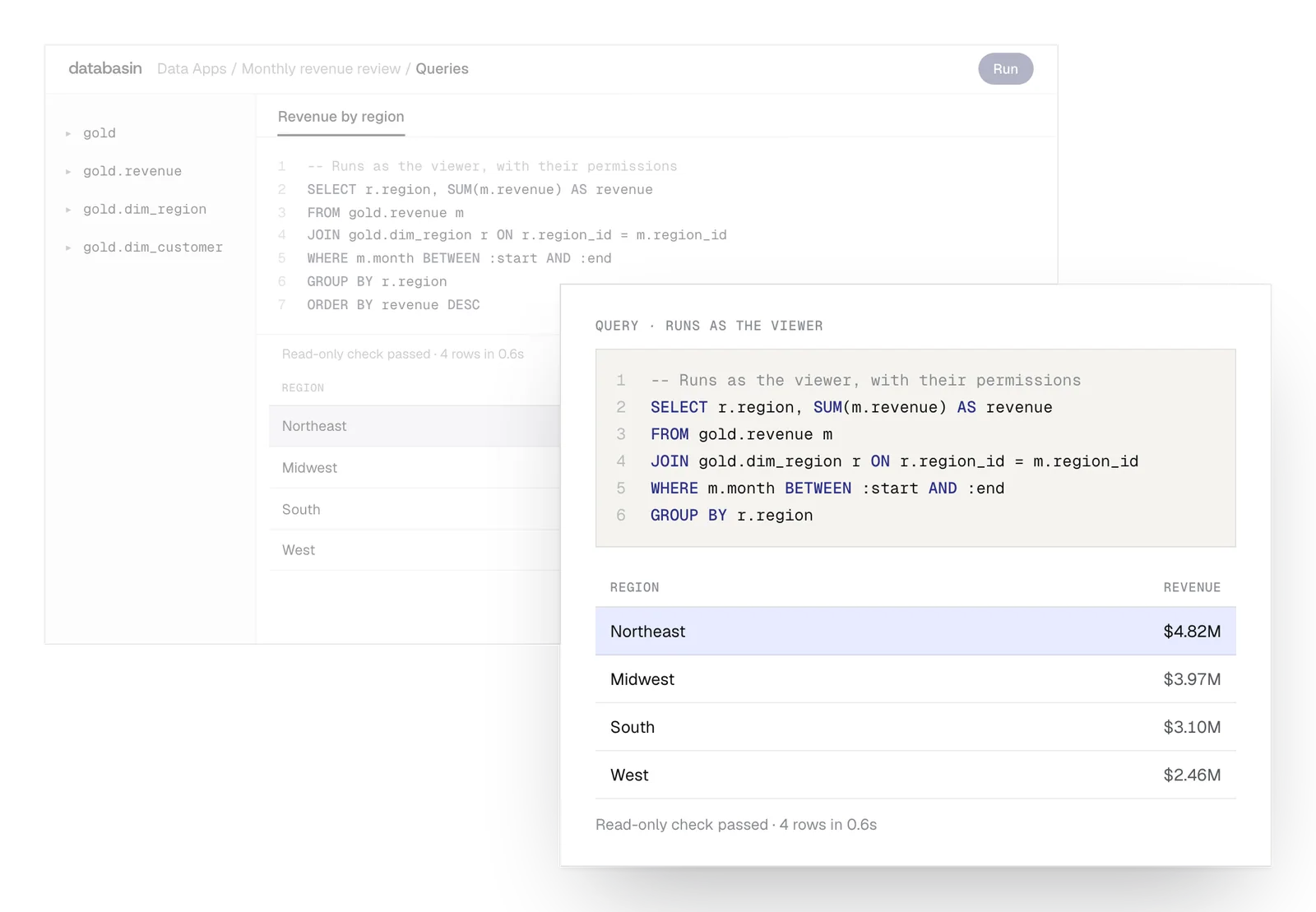
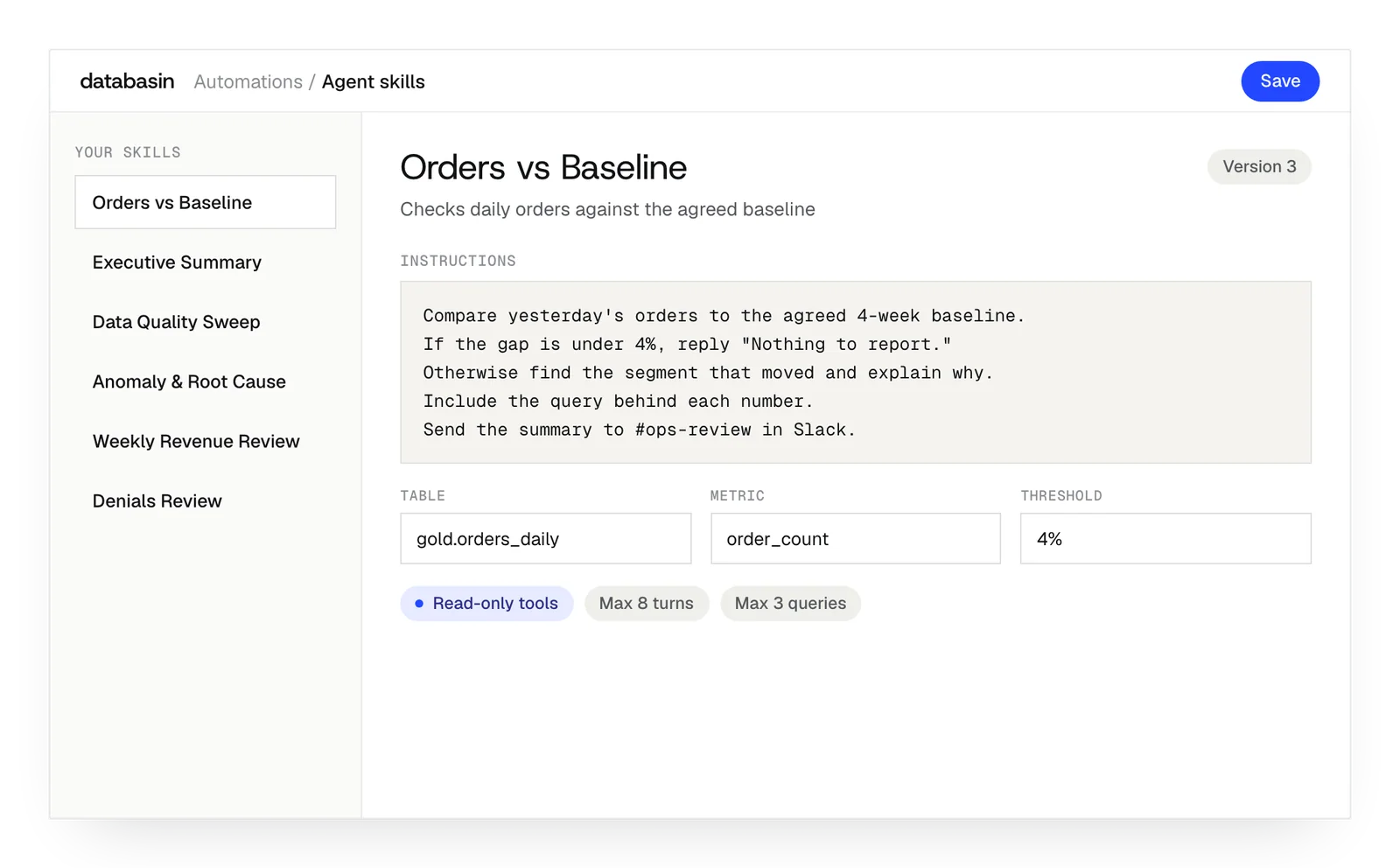
People can ask questions, build Data Apps and automate recurring work using the data connected through Databasin.
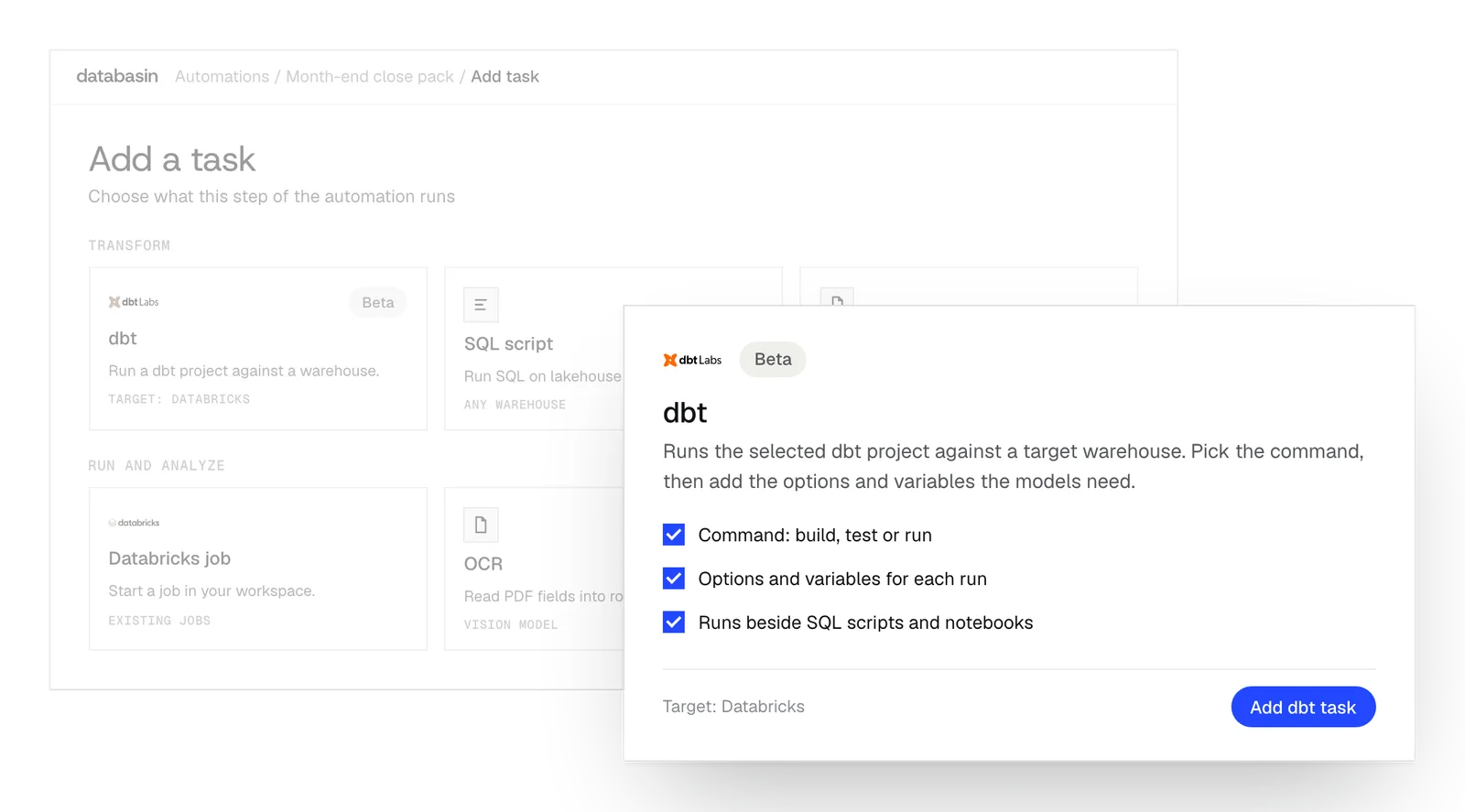
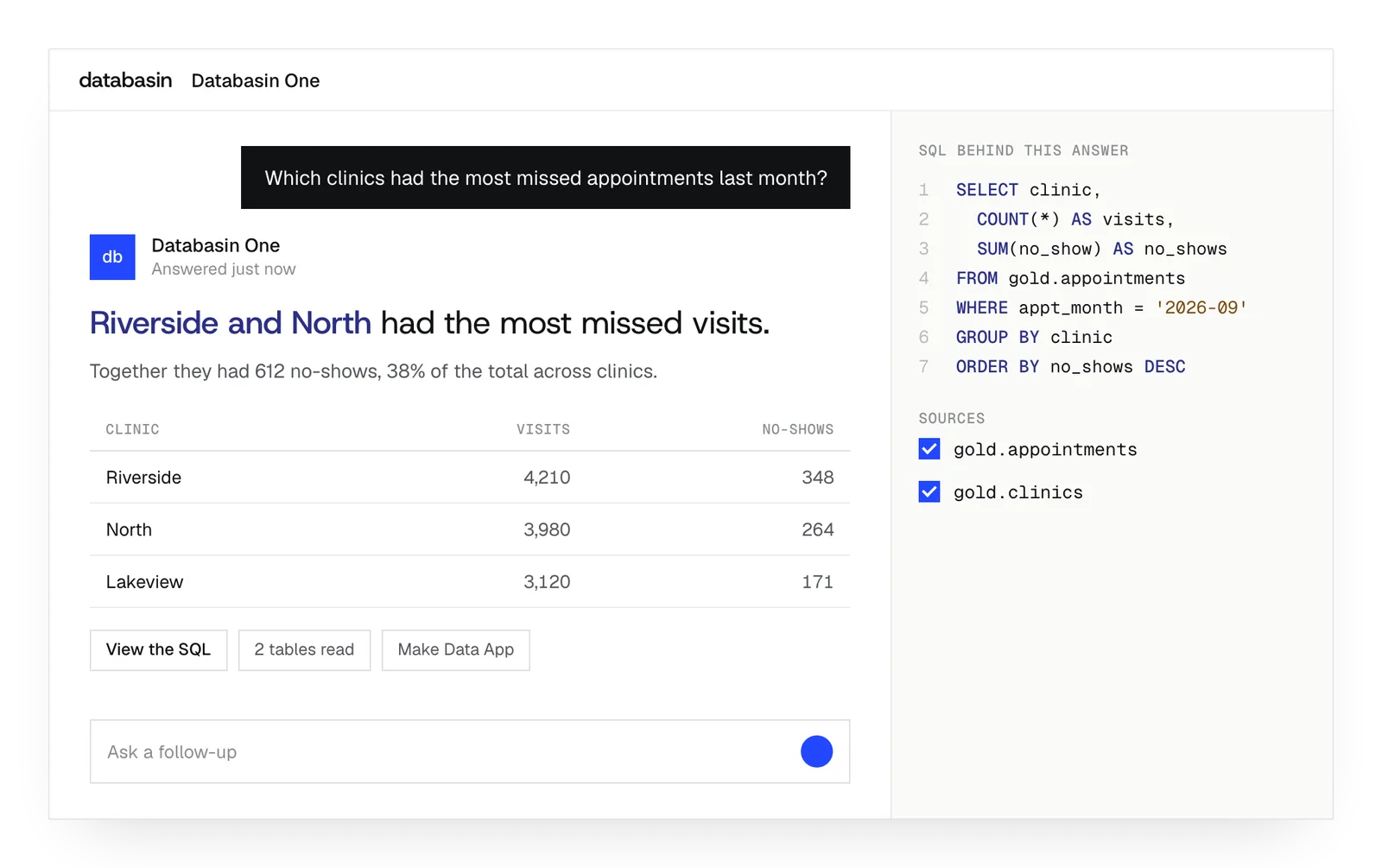
Design, Build, Run
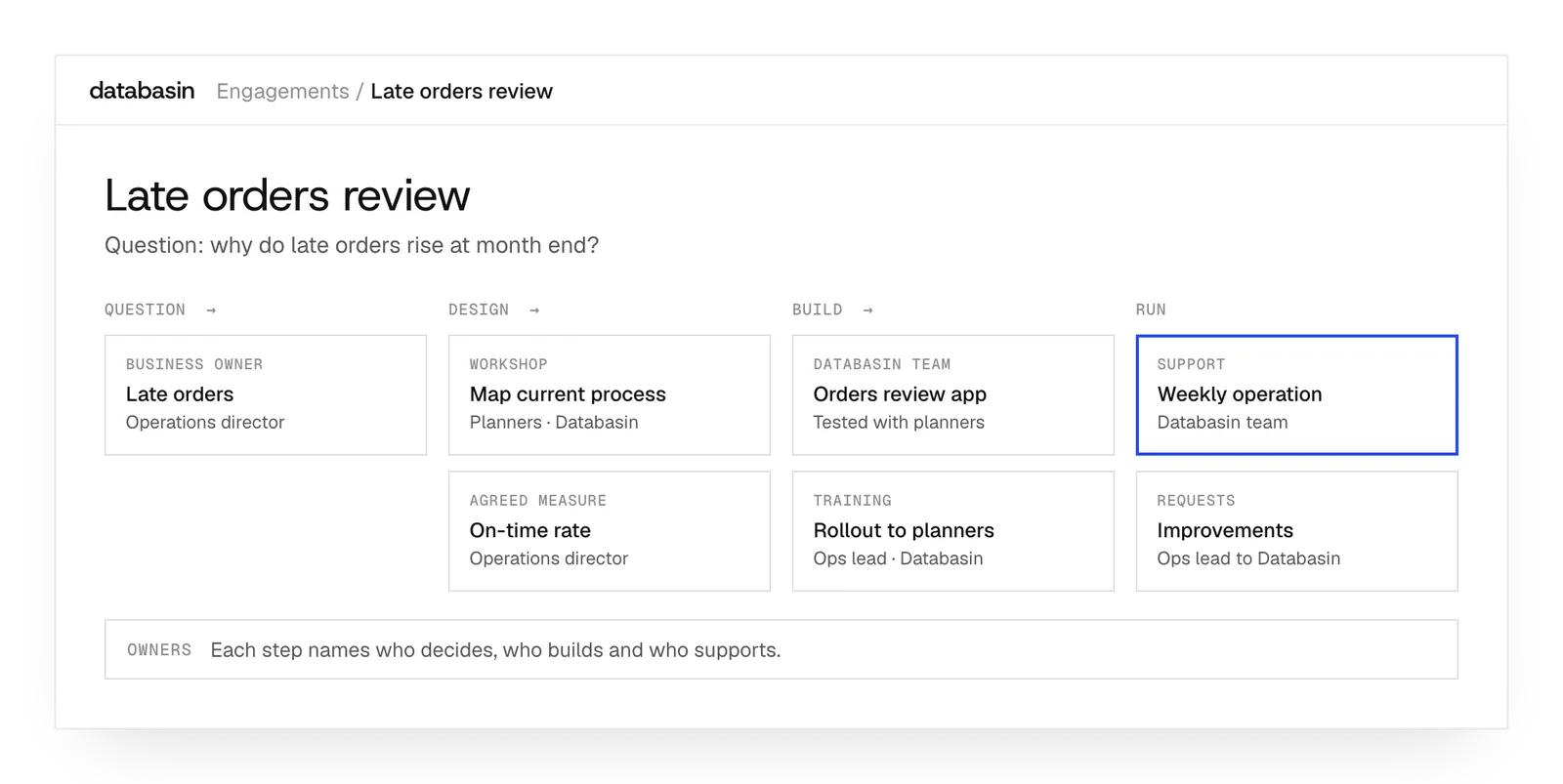
We take responsibility for the work from defining the outcome through implementation and ongoing support.
Design
We define the outcome, current processes and expected return with your stakeholders. A working example shows how Databasin would answer your business questions.
Build
We get your first use case live in 90 days. Communication, rollout, training and success measurement are included in the work.
Run
Choose the help you need after launch. We can run the solution for you, provide monthly support hours or stay on call.
The work included in delivery
Process design
Current and future work
The people doing the job help us map its current steps. We design the future process around the intended outcome, showing where information comes from and where decisions happen.
Process maps, expected return and agreed business measures
Data preparation
Sources and business definitions
We connect sources and prepare their records with the measures and access the application needs. Those definitions can serve answers, reports and recurring investigations consistently.
Connected sources, prepared tables and shared business definitions
User introduction
Rollout and training
We introduce the application through communication, rollout and training. People learn how their work changes and practice the process they will use.
Working application, rollout communication and training for users
Success review
Measurement and continued improvement
We review the application in use against the agreed measures. The findings show where changes to the process, data or training could improve the result.
A review of results against the intended improvement
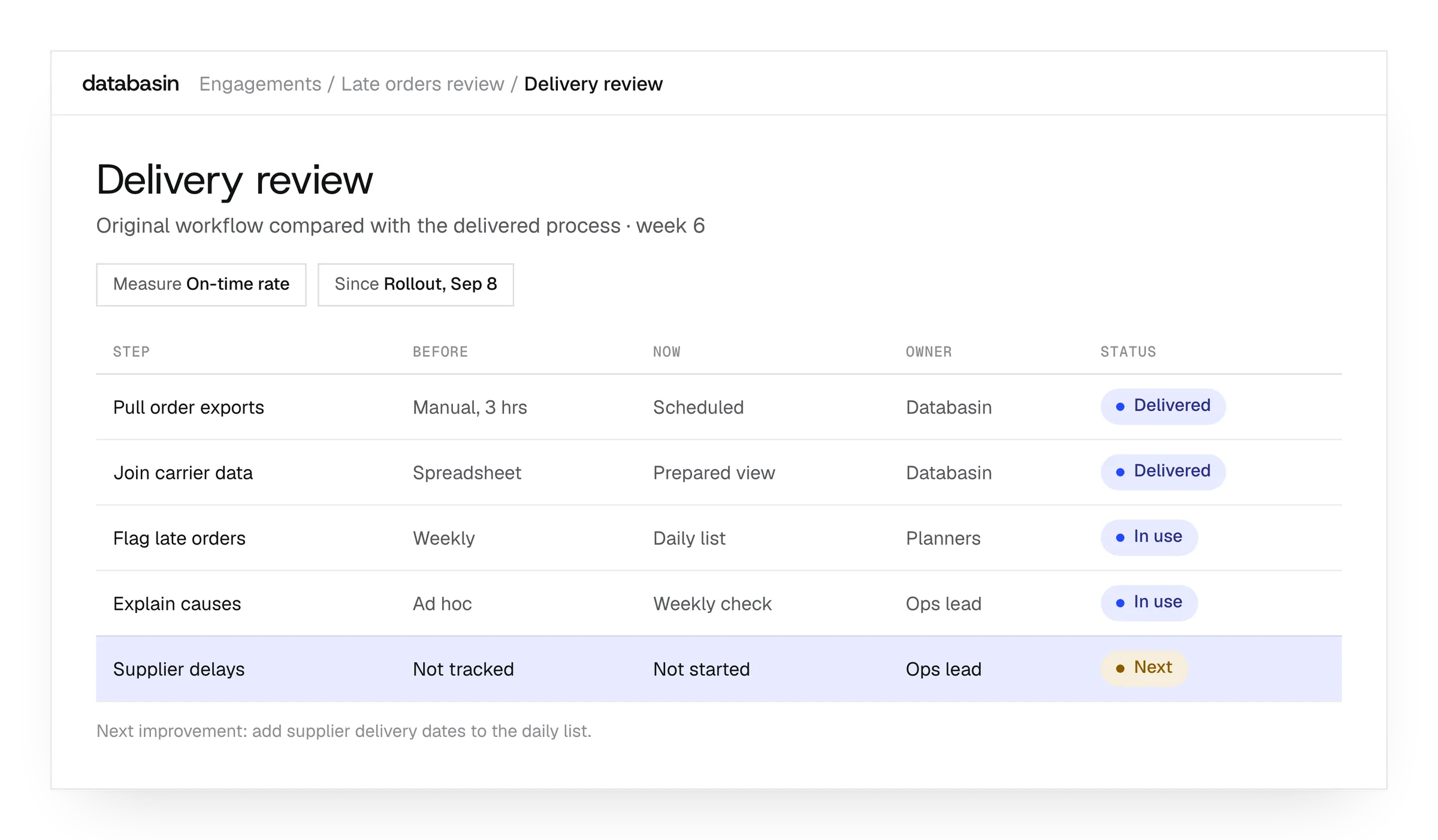
Compare the agreed improvement with the starting process, then decide what needs attention next.
What happens next
We would like to hear where your team wants to make progress with data and AI. We can discuss a project you have in mind or explore where Databasin could help with the work.
What happens next
Book a demo
Book a conversation about your organization and the work you want to improve. Questions about where to start are welcome.
Explore the opportunity
We show a working example that answers your business questions, then discuss what it would take to deliver it for your team.
Get the first result
After agreeing the first use case, we implement it with your team. We train the people using it and measure how it performs.
FAQ
Who at Databasin does the implementation work?
Our principal-level team does the implementation with the people who understand your business and source systems. Their knowledge helps us apply reusable metric definitions, process maps and governance patterns to the work you need.
Who from our organization should participate?
The people who own the outcome, use the information and control the relevant systems should participate at the appropriate stages. Business owners help define success. Users explain the current work. Technical and security owners help establish access and deployment, with responsibilities made clear in the design.
What if different departments define the problem differently?
We examine the decisions and measures each department uses. The people responsible help establish common definitions for the application during design. Those definitions give the build team and reviewers a clear meaning to check against when they assess the result.
How do you establish the delivery schedule?
We plan around the dependencies found during design, including source access, model changes and decisions needed from your organization. Rollout and training belong in that sequence too. The plan covers both building the application and introducing it to its users.
Can your team work alongside our own engineers?
Yes. We plan the work with your engineers and use their knowledge of the existing infrastructure and sources. Together, we assign the tasks. Databasin supplies its platform and the engineering and delivery work needed to complete the application.
Can our team operate the solution itself?
Yes. We prepare your team for that role through training and an agreed operating arrangement. Before the transition, we identify the work it will handle and where it needs support. Databasin can continue supporting those parts while your people run the rest.
How do you handle new requirements during the build?
We discuss what the new request changes with the people responsible for the scope. Some requests clarify the planned application; others introduce another outcome. We agree how to handle the request and its effects on data, process, training and operation.
When can we retire a tool that the new solution replaces?
Your organization decides after checking its remaining users and dependencies. We include that check in the transition and assess whether the new application covers the required work. The findings inform both the retirement decision and the communication to users.