Business answers from your data
Databasin helps your people answer business questions, build shared views and automate the data work behind recurring reviews. Our team connects the sources, defines the measures and implements the solution on our platform. We also help people use it, with training, rollout and support for the work after launch.
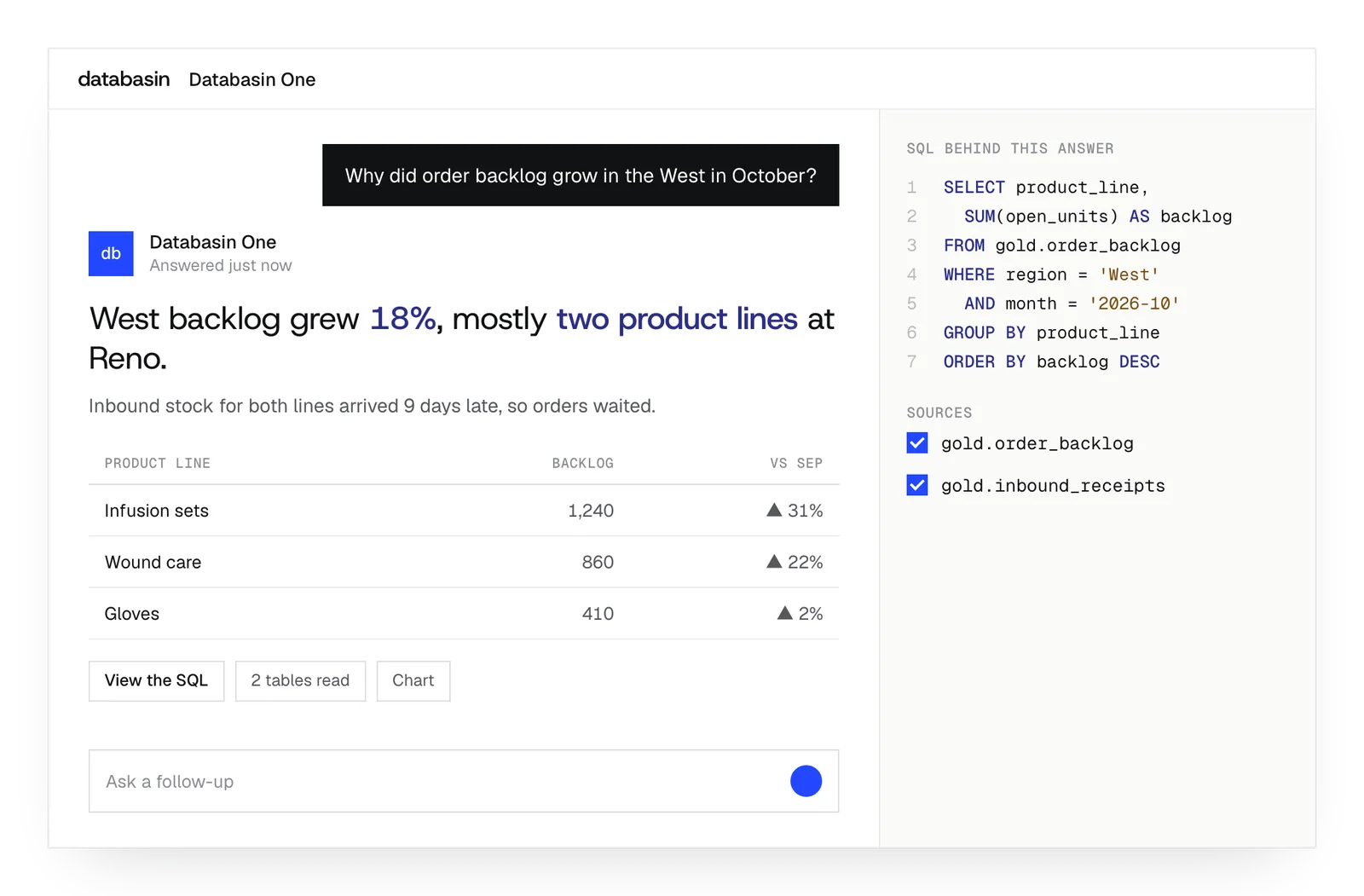





Analysis around the decisions you make
We begin by understanding the decision and the answer people need to reach it. That means examining the current process and locating the records needed to answer it. The source connections and business measures follow from that work.
Finance can explore the prepared result while an analyst examines its calculation. Both can refer to the same definition when they discuss a change. Reports and subsequent questions can reuse those measures, so the next investigation starts with the business context already in place.
Work people can do themselves
Investigate a change
Ask why a business measure changed and read the query and source records used in the answer.
Build a view
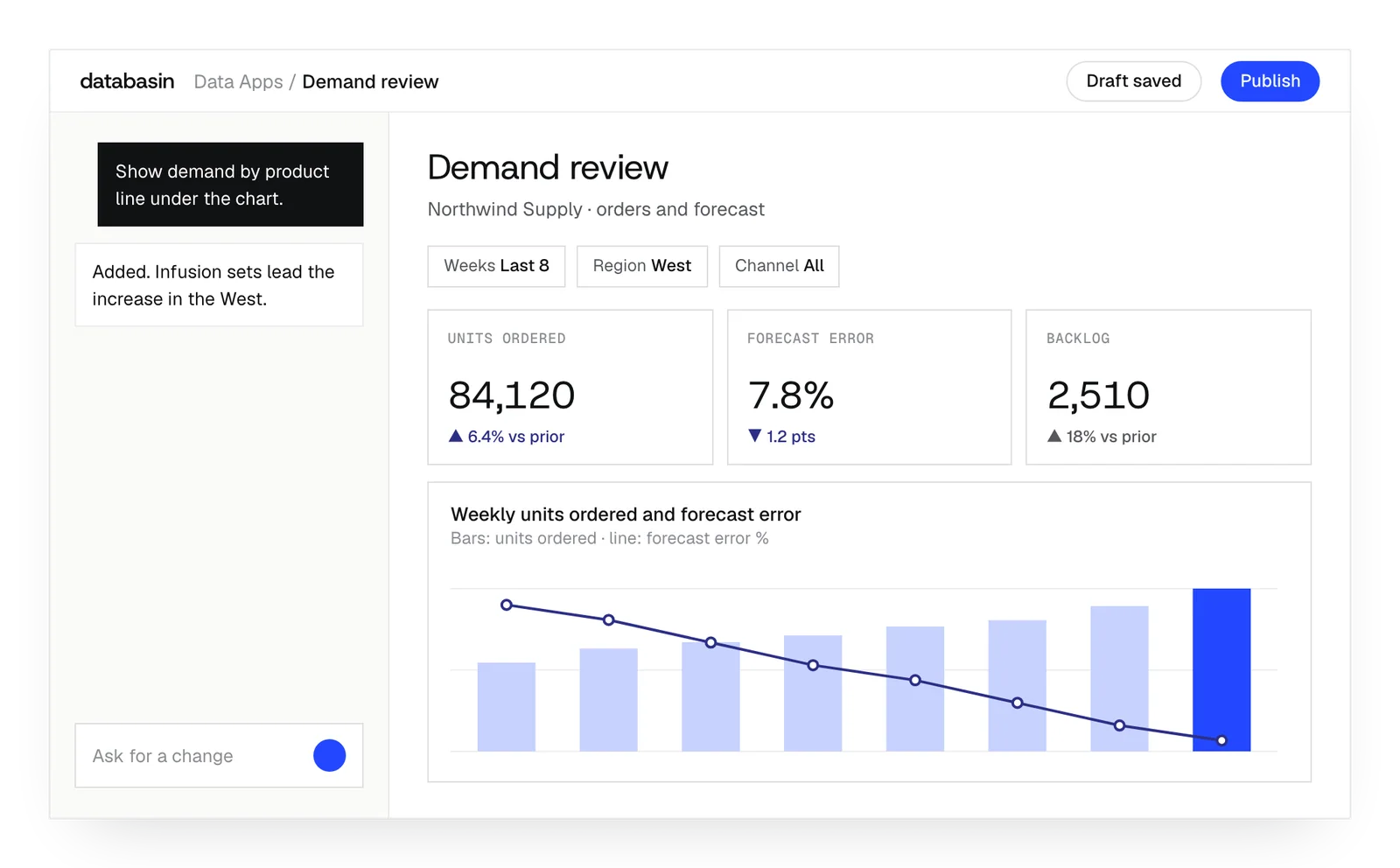
Describe the report you need and share its Data App so colleagues can examine the measures themselves.
Repeat a review
Use a scheduled workflow to prepare the next period and send the review with the same calculations.
How do teams explore the result?
A colleague opens the Data App with the data access configured for them. Filters rerun its queries, so a new selection updates the charts and totals together. They can ask a question beside that view. The person building the application can also describe edits in plain language and change the report as the work develops.
Support for the work after launch
We include training and rollout so people can use the application in their existing work. Success measurement follows the improvement defined for that work. The implementation therefore covers both the application and its adoption by the people who need it.
After launch, the help can continue at the level your organization chooses. We can operate the solution, provide monthly support hours or stay on call. New questions can then be discussed with a team that knows the data and application.
What happens next
We would like to hear where your team wants to make progress with data and AI. We can discuss a project you have in mind or explore where Databasin could help with the work.
What happens next
Book a demo
Book a conversation about your organization and the work you want to improve. Questions about where to start are welcome.
Explore the opportunity
We show a working example that answers your business questions, then discuss what it would take to deliver it for your team.
Get the first result
After agreeing the first use case, we implement it with your team. We train the people using it and measure how it performs.
FAQ
Is Databasin a fit when the warehouse already works?
Yes. We can build on the data the warehouse already supplies. We examine what people need to do with it and implement the missing connections, measures or application around that existing environment.
Do we need to choose an analytics tool before talking?
No. A conversation about the reporting problem or decision is enough to begin. We can discuss the tools in use and where Databasin would contribute before selecting the application and the data path behind it.
How do you handle different definitions of the same measure?
We establish what each measure means with its owners. The prepared views then carry the corresponding calculations. If the business needs more than one meaning, those measures remain distinct so readers can tell which one they are using.
Can colleagues continue using Tableau or Power BI?
Yes. Tableau, Power BI and notebooks can query governed tables alongside Data Apps. During design, we establish the supported engine and connection each tool needs. Existing interfaces can remain part of the way people use the data.
What if a source requires more than a standard connector?
Native connectors are one route. Databasin also supports generic REST, SOAP and JDBC connections. We examine the source interface and required records to determine how the extraction should work and which modeling the application needs.
Can a recurring review include an existing Databricks job?
Yes. Databasin can call the job as an automation task. Its stage can follow source preparation and precede the next transformation or delivery. The existing Databricks work then runs as part of the same sequence.
What can we inspect when a scheduled run fails?
Task logs record the work and run status shows its outcome. Saved workflow versions identify the setup used, while failed tasks retry. Support staff can inspect those records to find which step needs attention.
Does each new question require another copy of the data?
A further question can use the same prepared view when its definitions fit. Synced data lives in open table formats that compatible tools can read. Another application can therefore use the existing records and calculations.
Can the implementation stay within our Azure environment?
Yes. Databasin Private runs with your Azure storage, keys and network. Hosted Databasin and an existing-platform arrangement are also options. We establish the deployment around the requirements for the data and applications involved.
How do we choose the first business result?
During Design, we examine the current process, intended outcome and expected return with your stakeholders. A working example helps make the proposed result concrete before implementation begins.
Discuss the answers you need
We can discuss the decisions your team needs to make and where the current data work gets in the way. Whether you have a specific project or broader questions, we can explore where Databasin could help.